Showing posts with label politics. Show all posts

Tuesday, March 30, 2010

A Wild Rumpus

Blimey, who'd have thought you'd get this sort of thing in Wigmore Street? The Jerusalem Quartet found themselves at the centre of a political protest yesterday as they played Mozart and Ravel at the Wigmore Hall. The ruckus was such that the BBC pulled the live broadcast and played a record instead. You can find viewpoints of the protest from both sides of the fence here and here. My chums at Classical Music report that the Wigmore's head honcho says:

"I want to make the point very strongly that we can’t possibly condone any kind of disturbance to an artistic event. Wigmore Hall is a totally non-political organisation, and by disrupting performances the protesters completely take away the whole meaning of an artistic event, which is something that transcends politics."


Let's think about that for a second: "an artistic event... is something that transcends politics."

Can the Arts really shut themselves off from politics? Certainly the Great and Good are happy to lobby for funding when there's a general election in the air. It's a bit difficult to claim that the Jerusalem Quartet stand apart from politics when their biography points out their proud serving in the Israeli military. They are promoted as ambassadors for Israel, and so I'm not sure anyone can reasonably complain if people who oppose that country's policies want to protest at their event.

I'm not standing up for the protesters' views here. I don't know enough to be able to offer an informed opinion on that. But I do think the right to protest is a valuable and important one that's under attack in this country at the moment, and I applaud anyone who stands up for their right to demonstrate in a non-violent fashion. I also have to admire the quartet for having the balls to complete their programme in the face of the protest.

Art encompasses (or at least can encompass) a larger world than political squabbles, but it's at best naive, at worst disingenuous to say that it's too high to concern itself with such everyday concerns. Music certainly has been called into the service of some very dubious acts in history. It's important for artists and musicians to engage with the world around them. The Wigmore Incident (should we call it Wigmoregate perhaps?) demonstrates that you can't shut out the world. Art has to confront if it is to have any meaning beyond a bit of entertainment for the middles classes. At the very least the Wigmore Hall audience must have been considerably more engaged in the moment than some people lead me to believe is often the case.

Want to hear this exciting event for yourself? You can't: the concert was supposed to be broadcast live on Radio 3 but got pulled when the disruption occurred. The quartet later recorded patches so when it's repeated all you'll hear is the music, which seems a tad of a Stalinist approach to the historical record by the Beeb.
Wednesday, September 17, 2008

Till the money runs out

The days pass, and I find myself on the brink of the new season, preparing to take up my cello and start rehearsing once more. After a good long summer break, it's good to feel some enthusiasm building for the coming year.

That's tempered with some trepidation, though. The credit crunch is biting everyone, and the orchestra's no exception. Rising costs, venue hire, the difficulty in persuading people to part with some cash in return for an evening's entertainment are all things that impinge on the activities of an amateur orchestra, and one that receives no subsidies at that. We rely on the subs that players pay, ticket sales and any sponsorship we can attract to keep going, and while it'd be exaggerating to say that we're on the brink of collapse, that fact is that an orchestra's an expensive thing to run; we made a big loss last year and we expect to this year. A lot of imaginative thinking will be needed to find new ways to raise money to keep the band going. (Any other amateur bands having the same worries round here?) >eanwhile hard decisions must be made, programmes changed and belts tightened.

Performing arts organisations must all be looking over their shoulders at the moment, as they're usually prime targets to have their grants cut when the economy starts to nosedive, no matter how well they seem to be doing. There have already been scare stories in the recent past when the Arts Council cut off all support to a number of prominent bodies. It's hard to avoid the conclusion that the time's coming when the best place to be is in an amateur band, working on a small scale and, for all the financial worries, perhaps better placed to ride out the storm than a large pro organisation that depends on public subsidy. One of the points trumpeted about the new Kings Place development is that it's funded entirely by private money, which I suspect is another sign that no-one sensible would want to be relying on public money at a time when there seems to be something in the air against the very idea of it.

On a tangent, there's some interesting (and quite long, don't try printing this out if you want to save trees) reading in this government report on amateur music-making. There's a bit of techno-waffle and stating the bleeding obvious, of course - this is a government document, after all - but I shouldn't be churlish, as it's good to see something vaguely official that propagates the notion that the Arts are something that people do, rather than a product to be passively absorbed. Whether this leads to the conclusion that amateur organisations should be cherished and supported in a way that officialdom doesn't really do at the moment, or that by some twisted logic their presence and popularity should serve as a reason to slash public arts funding remains to be seen.


Friday, September 12, 2008

Something fishy

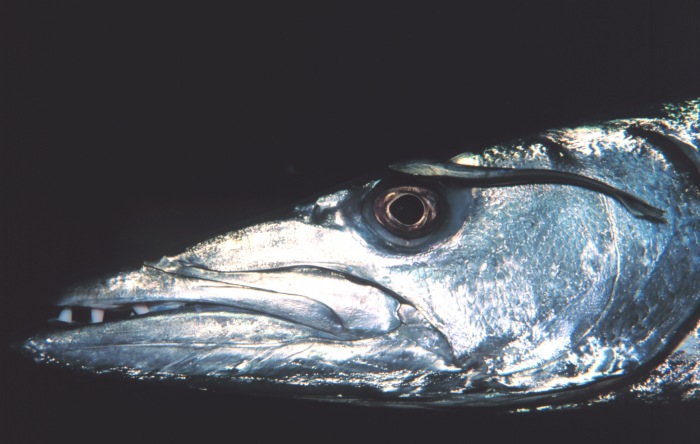
One of the interesting sideshows to the McCain-Palin shebang is big-haired soft rock giants Heart's reaction to the appropriation of their song Barracuda. The Wilson sisters issued a cease and desist notice to the McCain camp, which they dutifully ignored, as unlike previous occasions, they were fully paid up and entirely entitled to play it.* Co-writer Roger Fisher has now decided to make the best of a bad situation and pledge his royalties from the Republicans' appropriation of his song to the Obama campaign, which is a neatly ironic resolution.


What this does highlight (apart from the double edged sword of copyright law) is an interesting question: how much a composer can really be said to own his work once he or she has put it out into the world, and whether (s)he should even be able to exert any influence.

It's perfectly natural for composers to wish to retain control over their creations, of course, just as a parent would like their children to grow up and act like they'd like them to. But with music as with offspring, once they're in the world they rarely end out how you imagined. Some children grow up to be junkies, and some songs grow up to be Republican soundtracks - just ask Bruce Springsteen. All you can do is hope that the gentle nudge you gave them as you sent them out will be enough to put them on the right path. It's difficult to let go, but music can't be preserved in aspic, nor should it be. Composing begins with following the example of those who've gone before you, and you have to accept that if you have any decent ideas, they in turn will be taken up by those who come after you.

Here's something for the weekend: a different take on the song in dispute, by the splendid Rasputina:


*McCain's habit of violating copyright is a bit unfortunate, given his zealous support of extension and protection of it. Hey, maybe if he hadn't supported all those term extensions there'd be more public domain music he could use for his campaign.

Wednesday, June 25, 2008

Composing is a political act

I thought Morton Feldman was long gone, but you can't keep a good man down, it seems - I see he's now running Ireland, although I suspect he may be ruing the day he took the job at the moment. I'm sure he's taking the long view of it all, though.


taoiseach composer


Saturday, May 03, 2008

Dear London

You are a fucking idiot.

That is all.

Monday, March 17, 2008

Chains at a molecular level

The sleepwalk to a police state continued at the weekend, with a call from Gary Pugh, director of forensic services at Scotland yard, for children to be added to the national DNA database.


It's really disturbing that someone fairly senior in the police force feels quite able to come out and, in essence, say that the population should be treated as suspects - he is, after all, suggesting that a child be put on not because of anything it might have done, but because of a possibility that it might in future do something. He says at one point:


'Fingerprints, somehow, are far less contentious,' he said. 'We have
children giving their fingerprints when they are borrowing books from a
library.'


What. The. Fuck?? Does this really happen?


Does this really happen?


AC Grayling eloquently dispatches the pernicious "nothing to hide, nothing to fear" argument today in the Guardian.


At a time when the Chinese government is trampling all over the rights (and bodies) of the Tibetans, we need to look to our own back yards and see what's happening here before we find ourselves at the mercy of rulers with no regard for our right to live our own lives.

Wednesday, March 05, 2008

Politician may not actually know what she's talking about shock

The debate about the speech that Margaret Hodge gave yesterday rumbles on. And proves that for most people, the Last Night of the proms, the entire proms season and the entire range of what we call" Classical Music" are all interchangeable. Now that's what you call an image problem.

Hodge's own online diary, meanwhile, praised the Proms mightily last September. There's bound to be a suspicion that this proves that she' s simply a vacuous media tart who'll say whatever needs to be said to get some attention (I see more than one person has raised the spectre of Zhdanov), but is it just me or do those diary entries talking about operas and the Vienna Phil read like they've been cribbed from some bluffer's guide to classical music-type book? I'm now confused: is she ignorant or hypocritical?

Tuesday, March 04, 2008

Minister in ill-judged comment shock

Way Out
My heart sinks every time a politician offers an opinion on the Arts, and today's no exception as I read Margaret Hodge's reported comments on the Proms. Whether she's talking about the whole season or just the Last Night is being debated in a surprisingly well mannered discussion on the Grauniad "blogs" ( normally a hotbed of hate and ignorance way off the image of Grauniad readers as woolly liberal mung bean munchers), and of course there are less literate discussions going on, as well as the odd person happy to hitch her remarks to their own Beeb-bashing.

Hodge's words are of course flimflam, that show no knowledge or love of the subject at hand but an addiction to meaningless soundbites (pretty much what you'd expect from this government). It's interesting how quickly Downing Street seems to have intervened to put the can on the story - Hodge was booked to appear on Radio 4's The World At One, but at the last minute "something came up", and so we had to put up with Nicholas Kenyon waffling away.

I'm certainly not going to suggest that there's nothing that needs to be improved about the Proms - there's plenty - but this sort of thing really isn't going to start a sensible or useful debate about that. Rather, it's a sop, the Proms being a lazy shorthand (because of course to most people, the Last Night is the Proms, and indeed all classical music) for a certain type of white middle class idea of "culture". The minister's ill-thought out half-ideas about "inclusivity" and this governments obsession with a "British national identity" is fuelled partly by the prime minister's determination to make us forget that he's Scottish, and partly by a hatred of anything that might emphasise individuality. Hodge's singling out of the Proms is meaningless; it's a lazy, convenient target rather than any cogent analysis of contemporary culture. The only thing more depressing is David "Dave" Cameron's equally fatuous response. Let us not forget that politicians of all hues are rarely genuinely interested in the Arts, and never, ever interested in anything other than the lowest common denominator.

Sunday, February 17, 2008

Culture - to go!

This article by Armando Iannucci in the Observer today is thought-provoking stuff, one of the best bits of journalism he's written. Of course kids won't just stumble upon "culture" without being introduced to it, but when a government starts declaring quotas for arts in school I get suspicious, not least because (apart from the question of where these 5 hours are going to fit in and what can be usefully achieved in that time anyway) there's a bit of me that wonders if this sort of thing isn't a substitute for proper education rather than an impetus to it. What kids need to be introduced to is the idea that there are things in the world that require effort, and that they are worth that effort. I can't see how what they're suggesting will achieve this. Plonking a child in front of an orchestra isn't enough.

Wednesday, January 16, 2008

Faceoff

So, I deleted* my Facebook account. Not just because Facebook is evil, but that's certainly an element. It's also because I'm bored of it, and because I find the "gated community" element disturbing, the curious mixture of shut-off clique and utter contempt for its users' privacy.

Of course, it's not the only evil thing in the world. Hell, MySpaz is owned by Rupert Murdoch, and I haven't felt the need to disappear from that, maybe because I can see that there's a useful purpose to that in keeping up with the kind of small-scale bands I like to keep an eye on. Facebook at best seems only to do something I'm perfectly capable of doing myself - keeping up with friends - and at worst a substitute for it. And of course since it rocketed in popularity it's become a haven for bored office workers to arse about. I think I decided it was over when I started to get fictional characters adding me as a friend. that's usually a good sign.

*I say "delete". Actually, I only "deactivated" it, because it's not at all obvious that it's possible to delete it. Which sums up the sort of totalitarian control Facebook exerts over your personal information.

Monday, October 08, 2007

Know Nono? No?

In the absence of any coherent thing of my own to say (hey, I'm busy), may I point you in the direction of an excellent post about Luigi Nono.

Thursday, October 04, 2007

Free Burma

Today is Blog about Burma Day. I have my doubts about whether such things make any difference at all, (rather like the Facebook Burma group), or are just an easy way for middle-class westerners to feel better about themselves, but on the principle that it is better to light a candle than curse the darkness, and the realisation that there are some things more important than music or the petty gripes I put down here (i.e. almost everything), I shall mention the crackdown that the Burmese government is embarking upon, and add one more voice to the protest.

(And if you're confused by the whole issue of whether it should be called Burma or Myanmar, read this.)

Wednesday, October 03, 2007

There are none so deaf as those that will not hear

So, as part of my quest to find things to do that might enable me to chuck in the day job, I'm writing programme notes for the next (GRATUITOUS PLUG ALERT) Kensington Symphony Orchestra concert , and I find myself thinking and reading about and listening to Prokofiev's Fifth Symphony. And what strikes me about a lot of the sources I've read is how they all seem to peddle the line that this is a happy work, with no sign of the turmoil of the times (it was written during the Second World War).

Now, maybe I'm going out on a limb here, but it seems obvious to me that this is a deeply ambiguous work, steeped in suggestions that not all is well (and, I suspect, not necessarily in relation to the war). Double meanings in the arts were endemic in Stalin's Russia, and that's what I hear in the ferocious bombast of much of this symphony. I expect to read positivist guff in "official" soviet articles and the like, but what about all those who've written the books, sleeve notes etc since? How can they seriously write that this is a piece that ends happily? Have any of them actually listened to it?

Thursday, September 13, 2007

A sell-off by any other name...

The BBC Philharmonic has announced a £20 million sponsorship deal with Salford Council. I believe that having an orchestra to call its own (in riposte to the Hallé's association with Manchester) was a major selling point for Salford Council to become the BBC's new Northern host. The band will retain its name, but this means it has effectively been outsourced. I wonder how long it will be before the other BBC orchestras find themselves the subject of such schemes? As the Beeb is merrily selling off all the means to make television programmes, it seems hard to believe they will continue to fund several orchestras.

Monday, August 20, 2007

It is better to light a candle than curse the darkness


If you didn't see the Simón Bolívar National Youth Orchestra of Venezuela at the Proms last night, you missed a treat, and you should hunt down the TV and Radio broadcasts on your internet without delay. They're an astonishingly accomplished bunch, and play with a verve and enthusiasm that's truly inspiring.

Of course, life's rarely that simple. As an excellent post by the estimable Pliable explains, the orchestra and their conductor Gustavo Dudamel find themselves in an unfortunate political position as representatives of a country ruled by Hugo Chávez, and some accuse them of being de facto apologists for his regime, particularly when they performed the national anthem at the launch of the state-controlled TVes channel, following the closure of RCTV.

it's very easy for the likes of us in Europe to criticize, and I wonder what any of us would do in the same situation. I think of those who condemn Shostakovich for not being openly dissident enough for their liking, and wonder how they'd last in the sort of totalitarian terror he had to endure. I also wonder if, in his choice of Shostakovich, as well as the unapologetically American Bernstein, for their prom, Dudamel is perhaps sending a more ambivalent message about his homeland than we're giving him credit for.
