They've just finished the second song, and the crowd seem restless. There's a lot of slow clapping going on. They carry on, anyway. The sound's raw, loud, kind of sloppy. But it's exciting and immediate too. At least that's how it sounds to me. I'm not hearing it like those unhappy people in the audience, a sinking in that we're not in Kansas anymore. I know I'm not in Kansas anymore, I wasn't even born when we left.
There's some enthusiastic cheering as they reach the end of song 3. So it's not a given that what they're doing is alienating. Some people like it.
It really is loud, though. I want to turn the volume down on my earphones (an option not available to the people in the hall), but I'm going to stick it out, because there's a thrill in it, a sense that I'm transgressing something, even though it's only in my own mind (and whatever tinny hiss is escaping my headphones and reaching those at the desks next to me).
The slow hand-clapping starts off, and he tails off his introduction to the next song... the audience falls silent, and he continues. The cat-calls resume, and are starting to grow. There's a definite air of menace. I can only hear, of course, but it sounds fair to say the audience is divided.
Well, that one seemed to push them a bit far. The guitarist's tuning, and the jeering is growing. The singer is mumbling into his mike, speaking nonsense as far as I can tell. Eventually the claps subside as people realise he's talking and they can't hear what he's saying: "...mblmblmblmblmblif you only wouldn't clap so hard." There's a smatter of applause at this, so I guess he still has his supporters, they haven't all turned against him.
The thing is, you can't really tell what the audience is doing during the songs, because it really is fucken loud.
The guitarist is tuning again now, and the atmosphere really does sound like it's getting ugly. The piano starts off, and this song' different to the rest; where there's been a lot of exuberance before, now there's palpable menace, the hostility in the audience reflected back at them. "Something is happening, and you don't know what it is..."
They finish, there's more heckling, the audience laughs. One man shouts out. He's just saying what he thinks, he doesn't know he's just become part of a myth.
The singer's exasperated. "I don't believe you!". Then he realises the literal meaning of what he's just said. "You're a liar!"
Then, to the band:
"Play it fucking loud!"
How does it feel?
Thrilling.
(There's some clapping at the end. A few stuck it out, then. Animated discussion. The national anthem comes across the tannoy. Then the tape cuts out.)
(Seems someone's always upset about something, aren't they?)
(Now go here.)
Friday, July 11, 2008
Judas
Friday, February 29, 2008
Words written in the wind and the running water
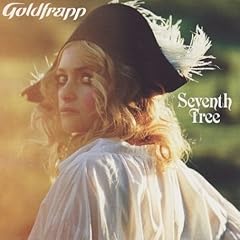
The best thing (at the moment, anyway) for me, though, is the lyrics. Although by that I don't mean what you think I do.
Take the first track, "Clowns". Reading the lyric booklet in my nice posh special edition blah blah, I see the opening line is "Only clowns would play with those balloons." Only that's not what I hear. What I hear is more like "Only cloeooayeedohmmmaooooo." My theory is that Alison's approached the lyric writing via the method of doing some nice sounding vocalising, and then scribbling down something that it could plausibly be. And this is a Very Good Thing.
Because that's pretty much how I hear lyrics anyhow. I've never been very good at remembering, or even hearing, words beyond the odd pertinent line, even Dylan. Where some people sit about trying to deduce the inner meaning of "Subterranean Homesick Blues", I just enjoy the sounds of the words. I don't really care what they mean, or even if they mean anything. What matters is the feel conveyed by them, and that's got little to do with syntax. This is demonstrated perfectly by the greatest lyric ever penned in the history of rock and pop: "Awop-bop-a-loo-mop alop-bam-boom!"
Monday, January 07, 2008
I'm Not There

There can't be anyone alive who's been so mythologised as Dylan, to the point where he hardly seems like a real person. For years he's fought against his own legend - I remain convinced that all those notoriously, um, wayward performances and records from the 70s until the 90s represent him trying to destroy Bob the Legend. Then, when he realised that being a shambles only reinforced the myth, he resigned himself to his status, and decided not to worry about it, after which we got the wonderful trilogy of albums of the past few years, the delightful Theme Time Radio Hour, and Chronicles, all of which showcase a Bob apparently more at ease with himself than he's seemed for years.
So what we get in this film isn't any kind of conventional biography. Instead there are 7 different characters, all standing in for various aspects and periods of Dylan's career and persona: a young black kid trying to fake his way through the blues, a young Rimbaud obsessive called, er, Arthur Rimbaud; an earnest young Woody Guthrie-a-like; the iconic super-hip sharp talker of the mid-60s (played by a woman); an actor with a failing marriage; a born-again preacher; and a country hobo who turns out to be more than he seems.
None of these personae presents any accurate depiction of events; this is clearest in the "60s" Bob, where events documented on film are presented in versions that play up to the mythology of what happened. Cate Blanchett's astonishing turn as "Jude Quinn" is the only one of the seven Dylans that is pitched as an impersonation of him; these are intended as archetypes that resonate with one or more perceptions of Dylan and his work. Even Blanchett's performance is more myth than reality, and comes across as the one attempt to "do Bob" more because Dylan's 60's image is one that rock stars ever since have appropriated in an attempt to seem sharp.
If you try and fit the film to the life too closely you'll end up frustrated. I'm reminded to some extent of Burrough's later work such as The Place of Dead Roads, where one character plays out his story in multiple times and dimensions. I suppose in a way one of the major themes of this film is the impossibility of nailing down who Dylan is or what he represents. At the end of the film, as Richard Gere rides off on a train, strumming one of his younger selves' guitar, perhaps a nod to Dylan's recent work, where he's become for real the great bluesman he started of pretending to be, we finally see Dylan himself, in a piece of footage from a live concert. He doesn't sing, he just blows his harmonica and strums his guitar, inscrutable and unreachable, and strangely peaceful. It's a moment that, like a lot of this film, lingers in the mind long after the credits have rolled. Maybe it shows what Dylan himself has always insisted: whatever roles and significances we may try and pin to him, he's really just a song and dance man.
Whether it's a help or a hindrance to know a great deal about Dylan before you watch this film I'm not sure. It'd be interesting to hear the views of someone who knew next to nothing about him


