Showing posts with label lunchtime. Show all posts

Friday, April 04, 2008

Alone again with the dawn coming up

There's a link here somewhere with yesterday's post; something to do with blurring the boundaries of what constitute sound and music, of what sounds we might use to make music. This all goes back to John Cage, of course, and quite possibly beyond; Berlioz scored for thunder in The Trojans, after all*.


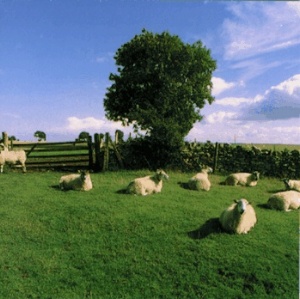
Anyway, after yesterday's orgy of feedback (which some spoilsports want to eliminate - boo!), today I'm in an entirely different place, namely the sun-bleached deserts of middle America - well, that what I'm put in mind of when listening to the KLF's album "Chill Out". Like Bill Drummond, I've never been there, but it certainly sounds like what it ought to feel like there, so much so that I suspect I should never go there in case the reality doesn't live up to the place in my mind.
It's a seamless collage of samples and original music that drifts by like clouds, essentially static, as is Metal Machine Music, but that's partly an illusion - things are happening, and by the end of the album you are somewhere different to where you started, it's just that the movement is glacial. I might make another connection, this time forwards to the mid 90s when I first heard Morton Feldman's music, which similarly uses apparent lack of development to mask a much deeper and more powerful progression.


It's about space, as is the other music I've mentioned; this is something Miles Davis learned from Stockhausen and used to good effect on "On the Corner". It's perhaps the great unrecognised concern of 20th century music that reverberates still: the creation of an almost physical sense of space. You can do it by the placing of your players, in the performance area or mix; you might do it by the careful placement of notes in time; it's difficult to describe adequately, but it sure is powerful when you hear it. And feel it, because it's as much about the physical sensation as the aural.


By the way, I thought this album was long out of print, but apparently you can get it on Amazon. It's getting increasingly hard to find music that's hard to find, isn't it?


*How he thought he was going to get a roll of thunder to order is an interesting question. Of course the practical answer is that you play it on a bass drum, but the fact remains that the score specifies "roule de tonnerre", not drums.


Thursday, April 03, 2008

chaos and beauty

Lou Reed's Metal Machine Music, one of the more remarkable albums of the seventies, has always had a special place in my heart. It's, in essence, an hour of feedback, and is often voted somewhere near the top of lists of the worst albums ever made. When I was a sullen pretentious teenager this clearly made it a cause to be championed in my own contrary way. Hell, Ian Curtis had once said it was his favourite album, and it was, y'know, really loud.

Actually, there was always more to it than that, but my appreciation of it has only grown over the years as I've gotten old enough to drop the posturing nonsense, and heard enough of the right sort of music to begin to appreciate the place it occupies in the scheme of things. It's stating the obvious that it's in part the extreme logical conclusion to what Reed did with John Cale in the Velvet Underground, but there are deeper roots in there, in Cale and original Velvets drummer Angus MacLise's earlier work with LaMonte Young's Theater of Eternal Music.

What got me thinking about it again was the remarkable CD by the German ensemble Zeitkratzer, who perform a painstakingly transcribed arrangement for acoustic instruments (joined in the latter stages by Reed himself on guitar). So what better way to follow this up by digging out the original for a comparison? And what better time to do this than a Thursday lunchtime?

The thing that strikes you coming back to it, is how un-atonal it is, in direct contradiction to its reputation. Reed knew this, of course - the deadpan sleeve note he specifies "avoidance of any type of atonality". The thing about feedback is, that it originates from the overtones in the source vibration, and so when you use specific open tunings, as Reed does to the guitars he used to record the album, you actually end up with something that has the sort of oblique tonal/modal feel that a lot of contemporary classical music references.

The other thing, quite unexpected if you're coming to it through its reputation, is that if you turn the volume down it's not harsh at all, simply a glittering web of melodies and harmonies, an energetic tumble of waves of notes dancing on the surface of a vast, deep ocean of drones.

It's always portrayed as a vicious, harsh, masculine "fuck you" record, but what keeps me coming back to it, and what should bring you to it, is the increasing realisation that it's a sensuous, beautiful piece of music. Try it with your sandwiches on a sunny day.