Christopher Small suddenly seems to be everywhere. I'd never read a word of his before last week, when one of those chains of link following that you do sometimes led me to his book Music, Society, Education. Reading it, I had the sensation of both elation and crushing disappointment, that someone had articulated thoughts and ideas that I've been half-having for years, much better and more cogently than I have, and 30 years earlier. And suddenly I seem to see references to this book, that I'd never heard of (why hadn't I heard of it?) and its author, here and there and everywhere. There's that sudden relief in knowing you're not alone, and that sudden disconcerting realisation that you're not alone. And all this is coming to the surface even as I write a whole series of pieces that touch on a lot of these ideas about performance, tradition, the whole question of what the Western European musical culture is, and what it needs to do to stop its slide into utter obsolescence. Or if it can do anything.
I don't believe in fate, or synchronicity, or whatever you want to call it. But sometimes you have to wonder. Sometimes things seem to pop up at an alarmingly prescient moment.
(By the way, is classical music dead? some people ask. The pedantic, correct answer, of course is that it died in 1827.)
Thursday, October 16, 2008
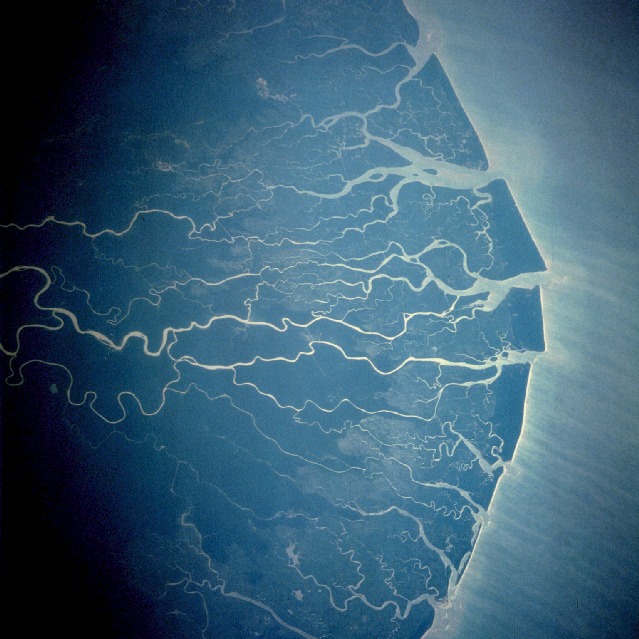
Delta
Monday, August 04, 2008
R.I.P. Aleksandr Solzhenitsyn
By coincidence, I'm in the middle of reading The Gulag Archipelago, one of those books everyone's heard of, but few have actually read. It's an astonishing book, that describes events that are hardly imaginable in their horror, and I hope you understand what I mean when I say that if it weren't so readable it would be unreadable. So it gave me an extra jolt this morning to turn on the radio just as the newsreader announced the death of Solzhenitsyn.
I feel like I've chickened out a bit, reading the abridged version rather than the full three volumes, but at the time the abridged version seemed less intimidating, and was also in the bookshop. Now that I'm about a third of the way through, I wish I'd gone straight to the unexpurgated version, so compelling is his prose. It's not just a catalogue of violence though; what shines through the relentless stream of nightmarish scenes is an extraordinary indomitableness of spirit. To read about such things may seem difficult, but it is necessary: because it's important, not just to know what depths humans are capable of sinking to, but to know that there are those who are brave enough to survive them.
Friday, January 04, 2008
To travel hopefully is a better thing than to arrive

I spend my tube journeys reading Will Self's Psychogeography, which chimes with my own feelings about travelling round on my bike: the sense of place that you don't get underground, rushing about at the commuters' pace. The other London, hidden beneath roads and rails, on towpaths and riverbanks.
Thursday, September 27, 2007
Friday, August 03, 2007
Provisional thoughts on Ulysses
What they rarely seem to tell you about Ulysses is how funny it is.
We all know about the literary canon - very large books by very eminent authors (usually dead white European men) that time and academia have declared Great. They are books you're quite likely to find in a school or university syllabus, books that everyone's heard of, but nobody's actually read, and you suspect that those who claim they have are lying. Ulysses is such a book - perhaps the quintessential Great Book. Only the other day I heard Will Self on the radio relating the experience of siting next to an Eminent Professor of English Literature at a dinner, who told him quite happily that he'd never read Ulysses.
Because why bother actually reading it? We all know about it, don't we? We know that it's hardcore Modernist writing, that it's some kind of meta-textural comment on Homer, that it's got some rude bits in it and ends with a Very Long Sentence. It is the Book Everybody Should Read, But Almost Nobody Has. Well, I don't know anyone who's actually read it, do you?
I've always had an awkward streak, the kind that seeks out those things that are generally considered difficult. It's why when I wanted to hear Captain Beefheart I went past the earlier easier albums and dived straight into Trout Mask Replica. So an author with such an obscuritan reputation as James Joyce was something that in a way I'm surprised I hadn't attempted before.
So I began to read out of a combination of duty and bloody-mindedness. But I didn't carry on that way.
Because (and now I come to type this, it seems to read as an awful example of stating the obvious) Ulysses is a fantastic book. Sitting on a train into work first thing in the morning, half asleep, I found the rambling half-sentences that represent Leopold Bloom's internal thoughts as he goes about his business early in the morning on June 16th, 1904 coincided very closely with my own frame of mind, which certainly helped - a bit of personal recognition is often all you need to find your way into something be it a book or painting or piece of music - and I rapidly discovered that if you imagine the whole thing in an Irish accent, it suddenly starts to make a lot more sense. I might even suggest that Joyce's comic element has a direct parallel with that other masterpiece of Irish-logical humour, Father Ted.
And it can't be stressed enough, a lot of Ulysses is very funny. Whether it's Bloom's Pooterish thoughts, the drunken ramblings and rantings of men in a pub, a scene in a newspaper office rendered in the style of a tabloid, there's a great deal of pure fun involved, and it was all a lot less frightening than its reputation might suggest (as I often find is the case with reputedly "difficult" work). Why this should come as a surprise, I don't know - is it because we expect modernism to be dour, scowling stuff, do we somehow think that comedy and Art are incompatible?
Now, this is not to say that it's an easy read. It needs a lot more effort than Harry Potter, and there are moments when, like a roller coaster, you have to hang on and hope you're still in your seat at the end, and just plough through. This is particularly true in the later parts of the book, in which our protagonists are heavily under the influence of beer and absinthe, with all the woozy hallucinatory quality that implies. But it's extraordinary how effectively Joyce manages to make his themes emerge from the swirl of the language, the deluge of word-play and allusion that characterises so much of the writing. You almost certainly won't pick up on every reference first time round, but it doesn't matter, pay attention and you'll find your way through (and Joyce helpfully recapitulates at certain points to help you keep track) - and of course, you can always read the book again - and it's very obviously a book that will repay repeated reading.
There's an immense emotional scope through the course of the book, through the dazed fug of early morning through to the drink-fuelled madness of evening, and the final clearing of the mind, and finally the rapid wakeful cascade of thoughts in bed that form the final soliloquy of Bloom's wife Molly. I compared Bloom to Pooter earlier, but that's only the start of his story. Through the course of his day, as we gradually learn more about him and his life, he evolves from a comic anal-retentive to a figure of pity, tragedy, integrity, and finally even hope. The closing sequences, after all that has gone before, are as moving as anything you're ever likely to read.
What people always ask you when you mention you're reading a book (especially a well-known but hardly read one) is, "What's it about?" Well, one one level, it's about what happens to a group of people on one day in Dublin. On another it's about Ireland past, present and future. On another level it's about literature, and what it's for, and what it might be capable of. Then again, it's about Life, what it means and how we might live it. In some ways it's about nothing, and in others it's about Everything.
The point is, it is Great Literature. But it's not because someone high in an ivory tower has decided that it is, it's great because it just is. And I could sit you down and tell you for hours all the things that make it great, but really the only way to understand is to read it.
How strange, that it should be a revelation that a Great Book is a book you'd actually want to read. What does this say about our culture, I wonder.
You should read this book. Not because it appears on lists of Great Books, or because it's studied in universities, or because it's "challenging" (although it undoubtedly is). You should read this book because it has something to say, and it says it with force and elegance and poetry. And it is worth the effort.


