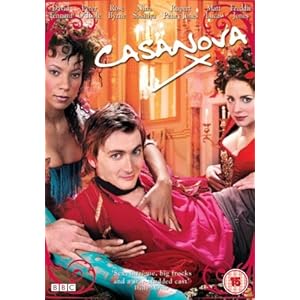
So watching it again now, as Tennant leaves Who and we eagerly await Matt Smith's debut, brings a revelation: blimey, Casanova pretty much is the tenth Doctor. Tennant's performance is absolutely stuffed full of the vocal and physical tics that characterised his tenure in the TARDIS, to the point where you have to remind yourself that it's not a Who story set in the 18th century. The copious shagging helps with that, of course.
What's even more remarkable is that Rusty D's script seems just as hewn from the same cloth. You'd expect similarities of tone, of course, but so much of the schtick present is similar - the running about, the cheery smart-alec persona occasionally leavened by hints of darkness, even some of the dialogue ("I'm sorry, I'm so sorry") bears a relationship beyond even what you'd expect from two shows with the same writer. I wonder if it was a dry run for Tennant's Who for Rusty, too. Minus the shagging, of course.
It's not all marvellous: the scenes with Peter O'Toole as old David Tennant seem strangely stilted. Maybe it's a lack of chemistry between him and Rose Byrne. Or maybe it's just that the entire set-up reeks too much of maguffin to allow the narration of Casanova's memoir. The other thing is that for a writer who's so vocal about the terrible amount of expositionary dialogue on telly, Rusty puts a lot of expositionary dialogue in, especially in the first episode. And Tennant's blue contact lenses don't convince. Honestly, if they're going to go to the trouble of changing his eye colour to fit O'Toole's, you'd think hey could go the extra mile and choose the right shade of blue. Having said that, the performances (particularly Tennant) fizz with energy, as does most of the dialogue, and I remain very fond of the Adam Ant-channelling court scenes.
It remains a wonderful romp, and surprisingly affecting at the end. It's a shame it also shares Nu-Who's weakest characteristic: Murray Gold's shit music. I know he has his fans (e.g. Rusty T), but to my ears it's clumsy, half-arsed rubbish that really lets everything else down. I cannot for the life of me understand why TV people are so enamoured of his stuff. Every so often he threatens to have an idea that will match the inventiveness on the screen, but the execution almost always falls flat. And the crappy synth strings don't help, either.
Still, if you overlook that, it still stands up well even after the unimaginably long time of five years.
Wednesday, March 17, 2010
Casanova revisited
Sunday, January 17, 2010
PopStar to Opera Star
You know as soon as you see Alan Titchmarsh that you're not in for anything nasty. The housewives' favourite isn't going to preside over the sort of laughing at the mentally ill and desperate that Simon Cowell fronts in the early episodes of the X-Factor, is he? And so it proves in ITV's latest attempt to get some decent viewing figures by cobbling together spare parts from other TV shows like a cathode ray Frankenstein. You have to admire Mylene Kalss's professionalism, too. She stands next to Alan as he does his bumblingly affable schtick, and then delivers her lines with a steely determination. There's barely a hint of the pounding fear that must underlie every waking moment when you've rescued your career by wearing a bikini in the jungle and are absolutely, fiercely resolute that you are going to hang on to the spotlight this time, oh yes.
The judges on PopStar to Opera Star are a bizarre combination. One wonders what drugs the production staff were on when they chose them. I assumed before I switched on that Lawrence Llewellyn-Bowen must have been chosen because he's a bit frilly and poncey - y'know, like classical music? - but it turns out he's on because he's a DJ on Classic FM these days, presumably because he's a bit frilly and poncey - y'know, like classical music? Meat Loaf, of course, is famous for his operatic records. Operatic in the sense of wildly ridiculous and over the top, that is. Which is the point at which you begin to realise exactly how opera fits into the scheme here.
The other two judges are also the coaches for the celebs, which is disappointing, because it means no-one's ever going to be anything other than nice to the contestants. This is surely going to be a strain when they get to Alex James, who is surely the undisputed king of Being Shit At Classical Music On Telly. They are Kathryn Jenkins and Animal from the Muppets. Ironically, Animal is the only person here who's actually been in an opera. That's not half as ironic as the presence of Katherine Jenkins, though - a woman famous for singing everything the same on a programme whose whole point is supposed to be about singing things differently to normal. There
The format follows the pattern we all know from Strictly X-Maestro Academy. Each celeb in turn is shown "in training", then emerges onto the set to bawl out a popular aria, every warble the subject of frenzied cheering form the (allegedly) live audience. There's no insight into how "operatic" singing differs from "pop" singing, or of why the celebs should want to do it (other than being paid to appear in an 8-week TV series, which is steady work for a couple of months, isn't it?). "I only know my song from the Stella ad!" exclaims Kym Marsh, to the hilarity of some canned laughter. Of course, most people only know that song from the Stella ad, but we'll let that pass, eh?
Animal and the Jenkster are never gong to be nasty to their pupils on live telly, not even Alex James, but you'd hope one of the other two might offer a more jaded counterbalance to their gushing. But no. Meat Loaf appears to be channelling John Barrowman, while Lawrence Fop, appears at first as though he might do a Craig Revel-Horwood, but as soon as he opens his mouth it becomes clear nothing's going to upset the applecart. You'd hope that at least a mild frisson would develop when Kym and Mylene have to share a stage, but even they manage to put on a half decent pretence of liking each other.
There's a decent idea for a TV show struggling to get out of all this. Well, there might have been, but it's been strangled at birth. There's no insight into how classical singing differs from pop singing, no indication why either might be worth attempting (oh, how I'd love to see a programme where Kitty J was made to try and sing in a "pop" style, or indeed to inject any sense of insight or understanding into anything she sings, ever). The complete absence of any criticism means that there's nothing to be learned. It's not really anything to do with opera, either. But I suppose "PopStar to PopStar Singing In A More Wobbly Voice" wouldn't have been such a catchy title.
Some will probably say that this is dumbing down classical music or opera. Well, duh. There's not really much point in fretting over that though. The classical music business sold itself down the river a long time ago, and really only has itself to blame that it's become the musical equivalent of a posh bubble bath. Anyway, this is ITV. We didn't come here to be educated. But you might at least hope to be entertained. You'd be disappointed.
ITV's absolute fear of doing anything that might be dangerous, or risky, or innovative, means that all the tropes they've stolen from other shows are neutered. There isn't even any danger that the celebs might look a bit shit, not even Alex James, the King of Being Shit At Classical Music On Telly. I know this because I saw his bit on YouTube this Morning. We actually switched off halfway through Kym Marsh's introduction, unable to take another seven contestants when we could be doing, well, almost anything else. I was hoping it'd be a bit of trashy fun, but it was just dull. That's what you've done, ITV: you've made a programme so dull I couldn't keep watching long enough to see Alex James being Shit at Classical Music On Telly. And that is surely the nadir of dull.
Wednesday, August 27, 2008
Johannes Brahms?!
I wouldn't normally do this sort of thing, but this is such a headfuck I just had to. Poor old Brahms must rue the day he quit the job playing in a brothel.
found via Michael Sippy.
Saturday, May 24, 2008
RVW: Let's Get It On
I'd say more, but I'm trapped in relocation hell at the moment and really should get on with the packing. Normal service will be resumed shortly.
It's repeated tonight at 7.00 on BBC4, or you can blahblah iPlayer. And while I'm at it here's an interview with the man himself.
Obviously I'll be deeply possessed with Euro-fever by then. Assuming I'm not trapped under a collapsed tower of boxes.
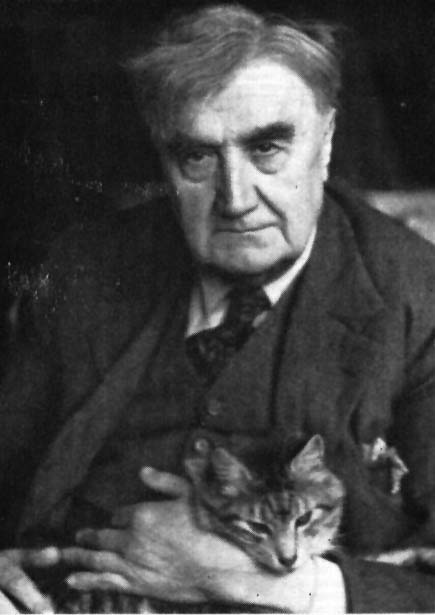
RVW would have felt right at home in the world of blogging, as this photo of him with a cat demonstrates.
Wednesday, May 07, 2008
Young Musician of the Year 2008 (BBC4)
Tuesday, March 11, 2008
Mozartballs
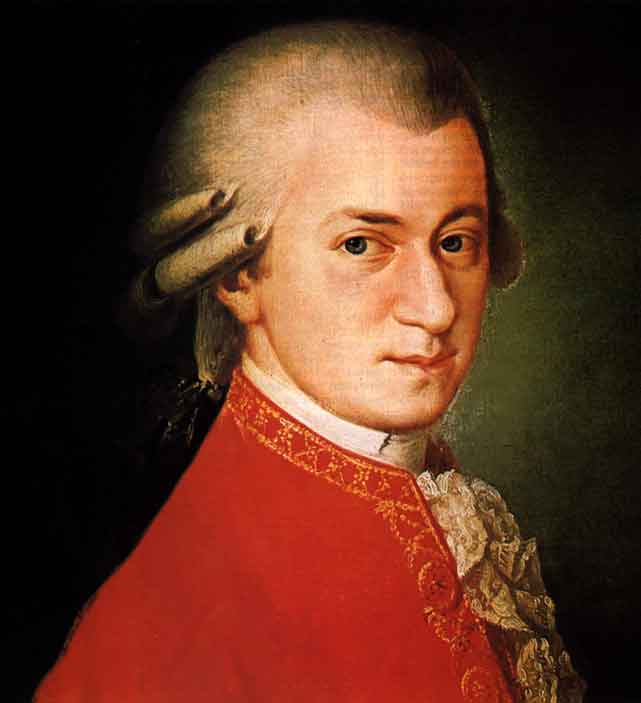 Steph Waller believes she is the reincarnation of Mozart. She gives talks "in character" (and costume) to schoolkids about him, along with her partner Lynette Erwin, who claims to be the reincarnation of the first singer to play the role of Susanna (and alleged tryster with the composer) Anna Storace. Personally I think if I'd been subjected to this as a child I may have been too traumatised ever to listen to Mozart again, but maybe that's just me.
David Cope, meanwhile, has written a program that enables a computer to "compose" like Mozart. He persuades Steven Isserlis to play through a cello concerto written by this program. Isserlis confesses to developing a certain fondness for the work, despite it being "really bad". That's not just a professional opinion, by the way - my companion has no musical training at all, and she managed to recognise its awfulness, a jumble of classical cliches that fitted together in the way a random selection of clothes bought from charity shops might.
These are just some of the characters we encounter in the documentary film, Mozartballs, which was on BBC4 the other night, named after the sickly sweet chocolate balls known as "Mozartkugeln" that act as the most prominent evidence that there is nothing on this earth so tacky that the Viennese won't slap a picture of Mozart on it and sell you.
It's quite an entertaining film, and not simply in a "look at the nutters!" way. To an English mindset the title brings connotations of Private Eye, but this is an American film, and hence lacking the acid that might imply. Rather, it's an affectionate portrait of some eccentric people who've made Mozart the focus of their obsession. Whether this says something about the continuing power Mozart's myth holds over us or the desperate desire of us all to bask in associated glory I don't know, but rather than mocking the film's subjects I find myself warming to them. We live in such a drab, conformist world in so many ways. Who can blame someone for wanting to be Mozart?
Thursday, February 21, 2008
The extraordinary continuing non-shitness of Torchwood

I hope Scott and Charlene are hanging their heads in shame, that their rebellious shenanigans drove poor old Jim to this.
Thursday, January 31, 2008
Here's Johnny
 Johnny Hicklenton drew some of the most distinctive, visceral, and plain old bizarre art you could hope to have seen in the pages of 2000ad in the late 80s and early 90s. At a time when the entire industry seemed to be in the grip of Bisley clones churning out brown painted art, he stood out as someone doing something utterly unlike anything else around, and there's still really no-one quite like him.
  Fortunately Johnny's too much of a fighter to sit back and accept this, and one of the ways he's fightiong back against this horrible disease is by working with Animal Monday to make a film about his condition, "Here's Johnny", the first screening of which I attended last night at the Science Museum's Dana Centre. It's a powerful piece that pulls no punches in letting you know what the (often uncomforatbly personal) effects of multiple sclerosis are, not just physically but pstychologically. This coukld make for uncomfortable viewing, but it transcends the awfulnes of its subject matter simply by the fact that Johnny's such an irrepressible, tenacious and funny man. It's being screened at Sight and Sound in Austen next month, whether or not it gets a cinema release remains to be seen, but as channel 4 have part-funded its making it'll doubtless be coming to a tv screen soon, and you really should keep an eye out for it and make sure you see it, because it's a provocative and thoughtful piece of film-making, the sort of thing you used to see all the time on Channel 4 before they gave themselves over to Wife Swap and Big Brother.
 Thursday, January 17, 2008
Torchwood in "not shit" shock
It's amazing what incredibly low expectations can do.
By the end of the first series of Torchwood (that's series. Seasons are something they have in America) I'd passed through some kind of cosmic irony barrier and was starting to enjoy it for just how unremittingly awful and laughable the whole charade had become. So series 2 was never going to have to do very much to improve in my eyes, and pie-eyed sucker that I am, I decided to give it another chance.
And good lordy, it turned out to be rather enjoyable. Mainly I think because they've decided to ditch the teen-angst vibe and get funny. there were many good gags in the first episode, not a few of which seemed aimed at the weaknesses of the first series. The whole thing's still ridiculous, and paper-thin, but it now has a healthy sense of its own daftness, and is infinitely more watchable because of it. it also helps that the team now actually appear to be operating as a team, and to have some kind of affection for each other and be vaguely likeable as characters. And that Captain Jack now appears to be more or less the same character as he is in Doctor Who. Having Spike out of Buffy as a guest star (out-gaying John Barrowman, which is quite some feat) helped as well. Although the relentless attempting by everyone to get into everyone else's knickers is gong to get very tired very quickly. But all in all, it was quite good fun.
Of course, the first episode of the first series was quite good fun, and look how that turned out, so there's still plenty of time for everything to go tits up. Still, next week we have the prospect of the lovely Freema Agyeman and Jim out of Neighbours to look forward to, so fingers crossed they manage to keep it up (fnarrrr!).
Wednesday, January 09, 2008
How Pop Music Works
Oh, Charlie, Charlie, Charlie. Don't you look fashionable in your unbuttoned shirt and Converses? Look at you, grooving to "Tomorrow Never Knows", nodding sagely to Joni Mitchell, telling us how great Imagine and Bohemian Rhapsody and Wyclef Jean are, making it OK to like pop. Well, you know what? I don't need your patronising waffle to justify listening to anything. I don't need you pinning songs down like butterflies.
The thing is, there are some interesting people on this programme, with pertinent things to say about what makes a great pop song. But why do we have to put up with you bringing your relentlessly average thoughts to bear? It's bad enough that you're becoming ubiquitous in the field of classical music on telly, a middle aged, dressed twenty years too young television producer's wet dream of half-arsed ideas of "accessibility" and "relevance". Why do you have to ruin pop as well?
Sunday, December 09, 2007
Idiots attack other idiots
The Observer today features an attack by director Tony Palmer on the BBC after he received a rejection letter demonstrating some quite spectacularly slack-jawed meejaspeak drivel. This sort of thing should rightly be lambasted, but before the Observer gets on its high horse it might like to double check such things as what a symphony is, which isn't The Lark Ascending, or indeed the Fantasia on Greensleeves. The fact that the same paper goes on to feature this witless tribute to Stockhausen, which seems to think his greatest contribution to music was "realising that Wagner was rock 'n' roll", in a section featuring a large photo of Simon Cowell on the front, says quite a lot about the Observer's cultural priorities.
Friday, November 02, 2007
"It's either Romana, or Fred"

The Key to Time is the complete 16th series of Doctor Who, first broadcast in 1978, and a novelty for the series at the time in having what we'd now call a story arc throughout the season, i.e. a vague plot linking all the stories together. This comes from the height of my first obsession with Doctor Who, so buying this was a shameless act of nostalgia on my part. I remember vividly reciting all the best lines from each episode on Monday morning in the playground, but of course it's 30 years later, and everybody knows the effects were crap and you couldn't get away with that now, don't we?
Well, ya boo sucks. I thoroughly enjoyed it. It's surprising how well it all stands up. See, it doesn't matter that the effects were crap (and actually, considering how little money they had, what they achieved and the ingenuity they show in achieving it is remarkable), or that it's sometimes a bit hammy, because there's more imagination in the least of these stories (probably "the Power of Kroll") than a month of most kids' TV now. Tom Baker's in great form, funny and mad and not yet a parody of himself, Mary Tamm as Romana talks back, not something the Doctor had been used to before, and there are some genuinely wonderful stories in here, best of the bunch being the Prisoner of Zenda spoof "The Androids of Tara". And in "The Armagedon Factor" K-9 actually gets something to do other than make smart-alec comments to cover up the fact that he's got stuck in the gravel again. Lots of extras (I've not listened to any of the commentaries yet, but as Baker, Tamm and John Leeson are all present, along with a number of supporting actors and directors, I anticipate some fun there), including a very funny interview with Tom Baker on Nationwide where he accuses Frank Bough of being a fictional character. And of course in "The Pirate Planet" and the final scene of "The Armageddon factor" you've got some significant early writing by the late Douglas Adams. Perhaps not the very best of old-skool Who, but a welcome reminder nevertheless of why it was the best thing on TV ever when I was 8.
Tuesday, October 02, 2007
RIP


Tuesday, September 11, 2007
Comics Britannia

It's quite a decent show, although I'd rather read Little Plum myself than watch Steve Bell reading it, to be honest. Comics is such a personal medium (as the great Leo Baxendale pointed out) and it seems intrusive to watch other people reading them out, as well as inadequate - it's a medium you really have to engage with yourself.
It's an exaggeration to say that Baxendale, Dudley D. Watkins and Ken Reid were single-handedly responsible for all British comics from the 30s to the 80s - but not that much. it was great to see their work discussed like this, and BBC 4 have assembled a wonderful array of talking heads. Good to see such issues as the incredibly racist (to our 21st century eyes) characters that have been quietly forgotten, as well as the wartime propaganda strips.
It tends towards a bit of a nostalgia-fest for my liking, but maybe the impression that comics are something that happened in the past will dissipate as the series goes on, and I suppose given the parlous state of the industry in this country, it's inevitable that it's going to be rather backward-looking. I'd have liked to see some mention or discussion of, say, the recent relaunch of the Dandy, but maybe that would have been too depressing a note to end on.
Anyway, it's worth watching, it seems to be repeated about 20 times over the week, and there's two more programmes to follow, as well as a welter of associated documentaries and reruns of Batman, so give it a look. Or better still, go out and buy some comics and stop them going down the pan.
Tuesday, August 14, 2007
Prom 41: Gershwin (BBC4)
What a fascinating, if flawed, experiment this was. The BBC Scottish Symphony Orchestra joined forces with the Marcus Roberts Trio for Gershwin's Rhapsody in Blue, with the trio contributing extensive improvised passages.
As the talking heads before noted, Rhapsody in Blue is itself a clash between jazz and "classical" styles, so on the face of it it's entirely natural to bring a jazz trio into the mix. The problem is that the excellent Roberts and his cohorts play in a post-Coltrane, post-Monk idiom, so what we ended up with was a three-way clash between classicism, pre-war and post-war jazz, with none emerging unscathed. Roberts' solos were wonderful, and when his rhythm section of Roland Guerin and Jason Marsalis kicked in things really took flight, but when they played along with the orchestra in the "composed" bits the result was oddly stilted, the stiffer '20s rhythms jarring against the more fluid post-bop element. I'd love to hear the trio alone improvise on the Rhapsody, as what they gave us tonight was exquisite, but I'm not convinced the middle of a "conventional" reading really works as the place to do it. Having said that, all involved acquitted themselves well, and this was an imaginative piece of programming, so full marks to the Proms for bringing it to us.
Roberts, Guerin and Marsalis gave us an encore, a delicious take on "I Got Rhythm" that had me hungering to hear more of them.
(Sorry, I can't comment on the rest of this show as I was watching Jamie Oliver on the other side, who showed me some excellent ways with courgettes.)
Monday, August 06, 2007
The 'wood life
Exciting news for fans of Garth Marenghi's Torchwood! The excellent Behind the Sofa reveals that sit-com legend Richard Briers is to appear in the new series. Briers describes the script as "terrifying", which could be taken more than one way, of course. Still, it does look as if they're getting some names in for the cast, so I continue to nurse the hope that it may turn out not to be complete shit. Hell, it can't be worse than the first series... can it?
In other, actually exciting Whoniverse news, I see that British comics legend Pat Mills is scripting one of Big Finish's upcoming 8th Doctor stories. A friend of mine opined on top sci-fi loony forum Outpost Gallifrey that Mills would be an ideal writer for Torchwood, and you know what, he's right. They'd never allow it on screen, mind.
Friday, July 13, 2007
First Night of the Proms (BBC2)
I don't mind Charles Hazlewood, I've met him and he's a nice bloke. So I can put down his slightly patronising irritatingness on telly events such as this to the autocue and the patronising, irritating script it's delivering him. His guests in the box are Gillian Moore, late of the London Sinfonietta and now of the South bank, and Philip Sheppard, cellist and composer. Both are intelligent, knowledgeable people, and yet in the context of a television event neither has anything interesting to say. I put this down to the inherently asinine nature of television.
The BBC Symphony Orchestra despatches Walton's "Portsmouth point" with efficiency. It's good to hear them on much better form than a couple of years ago, when their performance under Jukka-Pekka Saraste of Lutoslawski's Concerto for Orchestra was possibly the worst performance I have ever heard a professional orchestra give.
Elgar's Cello Concerto is a tricky beast. It's skewed by the influence of Jacqueline du Pre, who created the self-indulgent template that most cellists have copied since for their interpretation. Elgar is all about passionate emotion held in check, and Paul Watkins doesn't quite manage to escape the gushing influence of du Pre, although he gives a pretty fine account. I'm more disturbed by the appalling mix in the TV sound, which pushes the soloist to the top in a ludicrous and utterly unrealistic (and unmusical) manner. Halfway through I switch to Radio 3 to compare. but of course telly is showing with a delay of half an hour and Radio is already onto the interval talk. This misbalancing has the effect of robbing the final moments of all the subtlety and poignancy they should have, that I'm sure Mr Watkins gave them if you were in the hall. The audience clap wildly. Charles Hazlewood gushes. But that's what he's paid to do, of course.
Here's Nicholas Kenyon to gush a bit more. Nicholas Kenyon has run the Proms for the past decade, and has taken it from John Drummond's daring to a cosy safeness that has gone from feeling like a reconciliation to an unimaginative bland consensus.
Charlie wants to know what Nick's favourite moment is in the time he's been running it. Nick waffles on in a generalising way that says nothing. Well, no-one's ever going to say anything thoughtful or intelligent on telly, are they? Only self-congratulatory mush. Blah blah themes and anniversaries [the laziest programming devices]. Blah blah international visitors. Youth Orchestras. Christ, this is turning into something like a speech at a political party conference. Being a bit of a nerd, I can't quite get over the fact that Nick looks quite a lot like the Doctor out of Star Trek: Voyager.
Charles now talks to Paul Watkins, and an intelligent discussion threatens to break out. Here we have two intelligent musicians discussing an important piece, and it's wonderful. it's over too soon, of course, but then we have a nice little film profiling Jiri Belohlavek, who isn't given enough screen time, as he clearly has lots of interesting things to say. But overall I must give thumbs up to BBC 2 for this bit of the interval.
Now the talking heads return, and it's back to bland nonsense. Oh well. That's TV for you.
Actually, I'm being unfair. They're saying some interesting stuff about Beethoven here. But they're talking against the clock, and a conversation that should last hours is over in minutes.
Personally, I've always thought that Beethoven's 9th Symphony's opening 30 seconds are brilliant, and then it's all downhill from there. Belohlavek takes a very steady speed in the first movement, putting himself closer to Klemperer than Norrington in the speed stakes. But in sacrificing the urgency of the faster speed, he doesn't quite achieve the gravity necessary to make the slower speed work.
The second movement's more successful, with an understated quality that brings out the dance element of the music.
I was worried that the solo singers not coming on stage until this point would distract, but fortunately this proves not to be the case, and after a brief respite the orchestra moves into the slow movement, a difficult one to bring off. There's a balance between repose and movement to be struck, and thy don't quite bring that off, although there are many moments to savour.
the finale bursts in-ish. It seems curiously lacking in electricity, and the cello/bass recitatives are rather lumpen and slow for my tastes. And when the "Ode to Joy" theme emerges, it sounds curiously sleepy, which I suppose is a valid interpretation, but it seems to lack the innocence that I want to hear at that point. Maybe that's something impossible to achieve after all these years.
Once the singers come in, of course, it's all about joy and humanity coming together, and critical comment is redundant, because how can you not respond to such a sentiment? It is music that stands beyond any reasonable comment.
Sunday, July 01, 2007
What is this toss?
The literal answer is that this toss is the pilot for a resurrection of ancient telly music quiz Face The Music on BBC4, but the literal answer doesn't really answer the question, what is this toss?
You might be able to find it on the BBC's spanking new i-player, but I really wouldn't recommend it, as it really is shockingly poor and shows just how little anyone in television understands music. John Sergeant, who used to be so authoritative as a political corespondent, has a ponderous, pedantic delivery, his guests all look thoroughly uncomfortable, and the whole thing has an insipid, simpering air that I find utterly repellent. It makes Classic FM look like Hans Keller. Who commissioned this rubbish? If I knew nothing of classical music, I'd think, what a bunch of smarmy tossers. Knowing about it, I find it patronising, unintelligent and embarrassing. Oh, and I still think, what a bunch of smarmy tossers. It sets the cause of classical music back about 50 years.
Saturday, June 30, 2007
Da-da-da-dum, da-da-da-dum....
Maybe it's a sign of stress or impending madness (it's been one of those weeks), maybe Rusty Davies has me in the grip of some kind of mind control voodoo, or maybe it's all true and the Master really is in the process of enslaving us all, but over the past week I've kept finding myself tapping out that rhythm. When I was a small lad, Doctor Who was my passion and obsession. It broke my heart to see its decline during the 80s, and I was overjoyed when it came back and made such a success of itself. It's not perfect (the Doctor needs to stop saying sorry and STOP SHOUTING, for a start), but it's still the best thing on telly by miles. Bar a mid-season wobble (that disappointing Dalek story) this has been the best series yet of the reconstituted Who, and I can only hope, as I wait to find out just how he'll get out of this one, and anticipate a return to the unwatchable any-of-big-brother's-x-factor-grease-idol-will-do type rubbish that will undoubtedly swamp the schedules from hereon, that all those rumours that the BBC might actually be stupid enough to cancel it when RTD & co move on (after series 4, allegedly) are the utter nonsense that they must surely be.
da-da-da-dum, da-da-da-dum...
Friday, June 15, 2007
Relative Dimension
 There's a certain breed of gay man who sends women of a certain age all of a quiver in a last-ditch hormonal frenzy, and the exemple de nos jours is part time TARDIS occupant, chum of Emperor Palpatine and all-round hunk o' cheese John Barrowman.