Showing posts with label Stravinsky. Show all posts

Saturday, January 23, 2010

KSO Programme notes: Dohnányi, Tchaikovsky, Stravinsky

Ernő Dohnányi (1877-1960)

Symphonic Minutes, Op36

1. Capriccio

2. Rapsodia

3. Scherzo

4. Tema con variazioni

5. Rondo

Ernő Dohnányi (Ernst von Dohnányi in German, as he generally had it on his published compositions) is now an obscure figure, but in his day was considered the greatest pianist and composer to emerge from Hungary after Liszt. He studied at the Budapest Academy along with his childhood friend Béla Bartók. In the late 1890s he shot to fame after a single performance of Beethoven’s Fourth Piano Concerto in London. At the same time he made headway as a composer: his Piano Quintet was acclaimed by Brahms, who arranged its première in Vienna.

In the years that followed he also established himself as a conductor, and championed the music of Bartók among others. Unlike many star pianists of the day, he was equally comfortable appearing as a concerto soloist and as a chamber musician. His piano playing is preserved in what was for the day the cutting edge of recorded media: in the 1920s he recorded a number of pieces on the Ampico Reproducing Piano, which captured performances on piano rolls. This technological marvel’s life would be cut short by the advent of electrical sound recording, as well as the collapse of the market for player-pianos after the Wall Street Crash of 1929.

He became head of the Budapest Academy, but resigned in 1941 in protest at the anti-Semitic policies being introduced by the fascist government under the influence of the Nazis. This stance was not enough to prevent him becoming the victim of a whispering campaign by the Communist government that took over after the war, and he lived the latter part of his life in exile in America. Only in recent years has his role in the development of Hungarian music in the early twentieth century been reappraised and recognised.

Although he took some inspiration from Hungarian folk music, Dohnányi the composer is not a nationalist like Bartok or Kodály. His music is firmly in the mainstream tradition of 19th century Europe, and in his lush harmonies and orchestrations comes across as a more cheerful cousin of that of his Russian contemporary, Rachmaninov. The five delightful miniatures that comprise the Symphonic Minutes date from 1933, shortly before he joined the Budapest Academy.


Pyotr IlyichTchaikovsky (1840-1893)

Violin Concerto in D major, Op.35

1. Allegro moderato

2. Canzonetta: Andante

3. Finale: Allegro vivacissimo

In July 1877 Tchaikovsky married Antonina Miliukova. He was neither the first nor the last man to enter into matrimony as a facade for his real inclinations. It was, however, by any standards one of the most catastrophically ill-advised acts he could have performed. He had first met her in 1865, when he was 25 and she 16. He did not remember this occasion although it seems she did, and carried a torch for him ever after. She later studied at the Moscow Conservatory where Tchaikovsky was one of her professors, but had to leave due to financial difficulties.

She wrote to him at least twice in 1877, and their engagement was announced that year. By then she was 28, rather past what was then considered the ideal marrying age, and Tchaikovsky was the subject of gossip concerning his sexual tastes. He hoped that marriage would provide the cover for him to pursue his own liaisons as before. The marriage would therefore appear to have been the product of a certain desperation on both sides. Even on their honeymoon, Tchaikovsky was writing to his sister detailing all that he despised about Antonina and her family.

Entering an institution to which he was so unsuited with a woman whom he did not even like very much was clearly not going to end well. Tchaikovsky duly suffered a mental collapse and walked out on the marriage after only six weeks. The couple remained legally married until Tchaikovsky’s death, and Antonina spent 20 of the 24 years she outlived her husband in an asylum. Her own reminiscences of her marriage were recorded there after her husband’s death. They suggest a naive woman unable properly to understand what had happened but vaguely aware that there had been some sort of misunderstanding between them. For his part, Tchaikovsky virulently criticised her in letters to his friends, referring to her as “The Reptile.” They met only a couple of times again, even then much to Tchaikovsky’s disgust.

Tchaikovsky escaped to a resort by Lake Geneva in Switzerland to recover. It was here that his Violin Concerto took shape. He was joined by a pupil of his: Yosif Kotek was talented enough to have been a pupil of Joseph Joachim. They played through a number of works on violin and piano, including the French composer Eduard Lalo’s Symphonie espagnole. This seems to have been the immediate catalyst for the concerto. He wrote to his patron, Nadezhda von Meck. “Lalo... does not strive after profundity, but he carefully avoids routine, seeks out new forms, and thinks more about musical beauty than about observing established traditions, as do the Germans.”

With Kotek on hand to provide technical advice, work on the new concerto proceeded swiftly and it was completed within a month, even though Tchaikovsky replaced the original middle movement with the Canzonetta that provides the lyrical heart. He hoped that the violinist Leopold Auer would give the first performance. In his enthusiasm he sent it straight to his publisher complete with dedication: it was in print before the dedicatee had actually seen it. Later in life, Auer denied the rumour that he had declared the concerto “unplayable”, but he was certainly not convinced of its quality, and felt that some of the violin writing was not suited to the instrument. He therefore declined to perform it, and the planned premiere in March 1879 had to be cancelled. Eventually Adolf Brodsky became the first performer, and second dedicatee of the concerto in December 1881.

Reactions were mixed. “Long and pretentious” was the judgement of the influential critic Eduard Hanslick, while Theodore Helm of the Wiener Signale declared it to be “an accumulation of discords, confused climaxes and dressed-up trivialities, covered by the national flag of the most barbarous sort of Russian nihilism.” None of this has prevented it becoming a firmly established favourite with violinists and audiences alike.

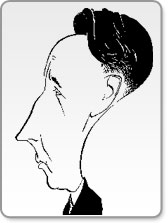
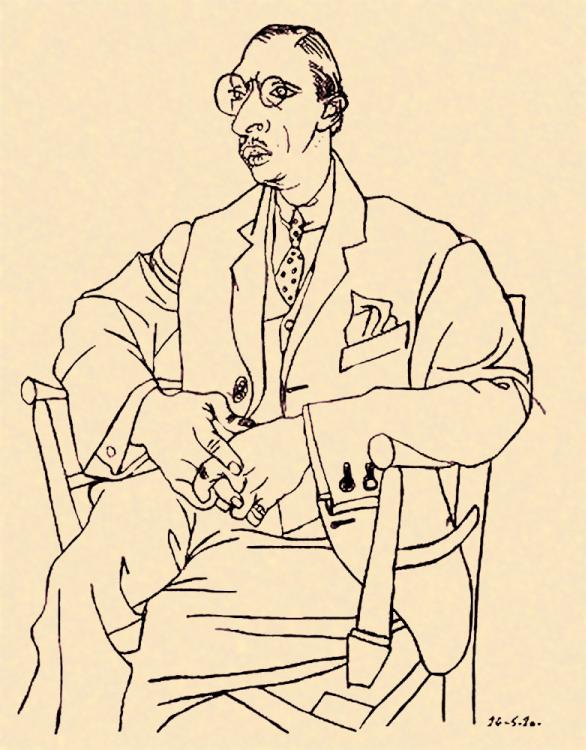
Igor Stravinsky (1882-1971)

Symphony in C

1: Allegro

2: Larghetto Concertante

3: Largo

4: Allegro non troppo

Stravinsky’s Symphony in C was composed in difficult circumstances. He had been living with his family in Paris since 1934, while continuing a long-term affair with Vera de Bosset. His wife Katya had long since become aware and eventually, accepting of his infidelity. In 1938, Katya, already stricken with cancer, contracted tuberculosis, which she passed both to her husband and their daughter Lyudmila. They were all confined to a sanatorium where Lyudmila died in November 1938, followed within months by her mother. Then in June 1939 Stravinsky’s own mother died. This was surely the most wretched period of his life.

Stravinsky sketched the first two movements of what became the Symphony in C in the sanatorium in response to a commission from the Chicago Symphony Orchestra. A further sign of his standing in America came with the offer of a lucrative post at Harvard. Stravinsky’s star was waning from the height of his fame in Europe, and so he was only too happy to accept the post.

Politically the time was ripe to leave Europe, although Stravinsky was not in personal danger from the rise of the Nazis as were Jewish composers such as Schoenberg. He was essentially an apolitical conservative. Understandably for someone who had been cut off from his homeland and culture by revolution, he sought order above all. This probably explains his rather unfortunate admiration for Mussolini throughout the 1930s. If he was in any doubt that the winds were blowing against him, he would have received a rude awakening in 1938 when the Nazis included his work in their exhibition of “Degenerate” Art. This, coupled with his desperate financial straits (the Chicago commission was the only one on the table at the time) made emigration an attractive prospect. Thus in September 1939, as war broke out, Stravinsky boarded a boat for the United States. He resumed work on the symphony in New York. In early 1940 Vera followed him, and became his second wife.

Some of the philanthropic wives of Chicago who were bankrolling the commission had withdrawn their money from the commission when they found out how much Stravinsky would be earning for a year’s lectures at Harvard. Nevertheless, the symphony was completed in 1940 and premiered in November that year in Chicago. Its reception was lukewarm, and it remains something of a Cinderella among his works. Stravinsky would observe drily in later years that it only received as many performances as it did because he conducted them.

Stravinsky frequently and controversially changed his compositional style throughout his career. Many of his contemporaries accused him of adopting a series of masks in place of displaying a consistent artistic voice. With hindsight it becomes more obvious that beneath the constant shape shifting on the surface of his music there is anunswerving purpose and personality. Stravinsky’s approach to the past is more similar to our times than his own. It is seen not as a lineage to be continued, but a vast resource to be appropriated, quoted, distorted or adapted as suits the composer’s purpose. Although this symphony takes as its starting point the archetypes of Haydn, Mozart and Beethoven, it pursues its own course, transforming and distorting its found model to produce something that still sounds like it could have been written by no-one else.

The middle movements nod more to baroque models than anything classical. The third in particular caused Stravinsky some trouble. He attempted to write something that would perform the same function as a Haydn minuet or a Beethoven scherzo without being reminiscent of either. The finale begins forcefully, but concludes in an unexpectedly sombre mood. There is here a strong scent of Stravinsky’s devout Russian Orthodox faith: its ritualistic air suggests perhaps a prayer both for the three women he had lost and the continent he had left behind.

Monday, November 02, 2009

KSO Programme notes: Debussy, Ullmann, Stravinsky

Claude Debusy (1862-1918)
Ibéria

1. Par les rues et par les chemins (In the streets and byways)
2. Les Parfumes de la nuit (Perfumes of the night)
3. Le matin d'un jour de fête (The morning of a festival day)

When Debussy composed Ibéria, the central part of his orchestral triptych Images (and the first to be written), he was at a turning point in his life. The notoriety that characterised his early successes had become international fame with the first productions of his opera Pelléas et Mélisande in 1902. The cult of “Debussyism” reached its peak, and scandal was replaced by expectation.

As is often the case, success was to be swiftly followed by a backlash. Those who had championed his earlier work found his new music staid in comparison. Those who had always considered his style to be a threat to the very foundations of all musical orthodoxy found more grist to their mill.

Shortly after he completed Ibéria in December 1909, Debussy exhibited the first symptoms of the cancer that would eventually kill him. In June 1912 his transformation from enfant terrible to yesterday’s man was brought home forcefully to him when he sat at the piano with the young Igor Stravinsky and played through the piano score of The Rite of Spring.

Some say that Images betrays a falling off of inspiration. This is unfair. Ibéria, in particular, shows off Debussy’s masterly and original way with an orchestra to the full, including what is for him an unusually unrestrained percussion section. Debussy had a strong mystical streak, which came from his involvement with the Symbolist movement. One of the aims of the Symbolists was to create art so evocative that it actually becomes the thing it depicts. In his attempt to achieve this, Debussy jettisoned traditional ideas of musical structure and form. A letter he wrote to a friend reveals something of what he aimed at: “You can’t imagine how naturally the transition works between ‘Parfums de la nuit’ and ‘Le matin d’un jour de fête’. It sounds as though it’s improvised.”


Viktor Ullmann (1898-1944)
Symphony No.2 in D major (“Theresienstadt Sketchbook”)
(Reconstructed from the Piano Sonata No.7 by Bernhard Wulff)

1. Allegro
2. Alla marcia, ben misurato
3. Adagio, ma non tanto
4. Scherzo: Allegretto grazioso
5. Variations and Fugue on a Hebrew Folksong

Terezín (Theresienstadt), about an hour's drive from Prague, was built in 1780, as a garrison town. The Austro-Hungarian Emperor Franz Joseph II wanted to ensure that the borders of the Czech territory he had conquered would not be overrun by German hoards from the north. In the event, the town was never used for its intended purpose. Instead it found an effective alternative role as a high security prison. When the German invasion finally came in 1940, Terezín reached its final form as a concentration camp. At its height, the ghetto was home to over 60,000 Jews. The town had been designed to house a population of 5,000. Food was scarce and disease rife.

This was not so different from any other concentration camp. But Terezín was distinguished by one extraordinary fact: its cultural life, which flourished. The plan was to dispel rumours of death camps by promoting Terezín as a cultural beacon. To this end, many Jewish intellectuals were sent there. Artistic activity and the performance of otherwise banned musical and theatrical works was at first tolerated, and later actively encouraged. The results, paraded to visiting representatives of the Red Cross and filmed for a propaganda film, were held up as proof that the Czech Jews were living an idyllic life, separate from the “native” Ayrians (who had been encouraged to immigrate by the Nazis).

Terezín was host to many talented composers, but Viktor Ullmann was perhaps foremost. A former pupil of Schoenberg, he had in the years preceding the war forged his own style, building on but completely distinct from his teacher’s. When war broke out and the Nazis occupied Czechoslovakia Ullmann found himself transformed overnight from an internationally renowned composer into a nonentity. His music was barred from performance and he was forbidden to appear in public. In 1942 he was sent to Terezín. For the next two years he was heavily involved in the musical life there, not only as a composer and pianist, but also as a critic. His surviving (by no means always kind) reviews of the musical productions there are one of the most important sources of information about artistic life in the ghetto.

That a vivacious artistic culture should thrive in a concentration camp seems scarcely believable. In an essay written towards the end of his time there, Ullmann reflected on the morality of art in captivity. “Theresienstadt was and is for me a school of structure. Before, when one did not feel the force and weight of existence because of comfort, this magic of civilisation, it was easy to create beautiful form. Here, where one must daily overcome the substance of life, where everything goes against the Muses: here is the masterclass... I must stress that I have bloomed in my musical work at Theresienstadt, without inhibition, and that in no way did we merely sit down and weep by the rivers of Babylon that our will for culture was inadequate to our will to live. And I am convinced that all those who have struggled to wrest Form from Art and Life will say that I was right.”

The symphony you hear tonight is a reconstruction: it has a dual existence as Ullmann’s seventh piano sonata. By the time he wrote it in August 1944, dedicating it to his children, such luxuries as manuscript paper were a distant memory. He wrote piecemeal on whatever paper came to hand. The manuscript is a fragmentary piano score, with notes for orchestration. It is unclear to what degree it was intended as a piano work or a short score for an orchestral work. Quite possibly Ullmann abandoned his initial ideas for orchestration simply because the resources were not available. Perhaps they reflect a hope for a day when he might be free again and able to write for a symphony orchestra once more.

The music contains many quotations, partly autobiographical, and partly coded messages to his fellow inmates. Mahler’s Song of a Wayfarer, Wagner’s Tristan and Isolde, and Richard von Heuberger’s operetta The Opera Ball are all quoted, as is Ullmann’s own opera The Emperor of Atlantis, also written for performance in Terezín. The latter is the source of an unusual feature of the symphony: the presence in the orchestra of a harpsichord, which also appears in the opera.

The “Hebrew folksong”that forms the basis of the Finale is in fact a Zionist song by Yehuda Sharett. It sets a poem by the Russian Jewish poet Rachel, in which the she imagines herself as her biblical namesake. Ullmann’s variations draw attention to its resemblance to the Slovak national anthem (also banned by the Nazis) and the Hussite hymn “Ye Who Are God’ s Warriors”. The famous chorale “Now thank we all our God” and the four-note motto derived from Bach’s name. Such Germanic Protestant music may seem incongruous in a Jewish ghetto, but it should be remembered that many of the prisoners would have previously considered themselves secular and German. Bach’s music especially was cherished as an important, and comforting part of their own culture.

Liberation came to Terezín in early 1945, too late for Ullmann: On October 16th 1944, having been persuaded by his friends to leave his manuscripts in their care, he was put on a transport train to Auschwitz. On arrival he was sent directly to the gas chambers. For all the darkness surrounding its creation, however, the lasting impression left by the music is one of great courage and determination. The music itself, and the fact of its survival, is a remarkable testament to the tenacious spirit of Ullmann and his fellow prisoners. Its diversity of influences and materials represents a plea for tolerance that is still all too pertinent today.

Igor Stavinsky (1882-1971)
Petrushka (1911 version)

Scene 1: The Shrove-tide fair
Scene 2: Petrushka’s cell
Scene 3: The Moor’s cell
Scene 4: The Shrove-tide fair (towards evening)

The Russian puppet-show Petrushka was a familiar fixture at the fairs of Stravinsky’s childhood. It was these he had in mind when he sketched an idea for a piece for piano and orchestra in 1910, in between his ballet The Firebird, and the next production he was due to write for Diaghilev’s Ballets Russes, The Rite of Spring.

Like many ancient national traditions, the show is a nineteenth century import. Petrushka himself is Russia's version of Mr Punch. The plot is essentially the same: the protagonist has a succession of confrontations with authority figures, all of whom he whacks with a large stick. Eventually he is tried and executed for murder, and goes to Hell. Diaghilev was taken by the music, and the idea of a production based around the carnivals, and asked Stravinsky to rework it as a ballet.

Anyone familiar with Stravinsky’s music will probably now be scratching their head, as the above plot bears very little resemblance to anything in the ballet. In fact, Stravinsky voiced the concern early on that librettist Alexandre Benois’s scenario for Petrushka contained very little Petrushka. What Benois (12 years older than Stravinsky) remembered most vividly from the carnivals of his youth were the Harlequinades – plays based on characters from the Italian Commedia dell’Arte. Thus Petrushka, the Moor and the Ballerina are in character closer to Pierrot, Harlequin and Columbine than what Stravinsky remembered from his youth. The closest Petrushka comes to his traditional demeanour is in the second scene in his cell (which derives from Stravinsky’s initial sketches) and in the closing pages where Petrushka’s ghost appears – which may raise the question, is the final apparition a ghost, or the real Petrushka? This is only one element of a disturbing undercurrent of the ballet: puppets behave like people; people behave like puppets; and the audience, which finds itself viewing events from the perspective of both as well as its own, may wonder where it fits into the scheme of things.

The combination of Stravinsky’s music, the exotic setting of the Russian carnivals and the flamboyant production values of the Ballets Russes added up to an instant hit. Not everyone was pleased with the result: many Russian critics condemned Stravinsky for his stylistic experiments and appropriation of folk materials. They saw it as a debasement of the legacy of Rimsky-Korsakov. This is a curious reaction given that Stravinsky’s veneration of his teacher is written in every note, sometimes to a plagiaristic degree.

When Stravinsky emigrated to America in the 1940s, he rewrote and rescored a number of his early works, principally to be able to copyright them under US law, but in some cases the changes were quite radical. The latter incarnation of Petrushka is largely unchanged in its music, but the orchestration is radically altered: by slimming down his forces, Stravinsky gave the work a new and lucrative life as a concert work. However, when he came to re-record the ballet towards the end of his life, he performed Petrushka in its original garb: more extravagant and theatrical than its leaner, concert-hall oriented revision.

Synopsis

The curtain opens on the eve of the St. Petersburg Shrovetide fair, sometime in the 1830s. – we hear the cries of the sideshow barkers drumming up audiences and street songs sung by drunken revellers. A barrel organist accompanies himself on the cornet (a rather rude song about the actress Sandra Bernhardt that Stravinsky had heard on a barrel organ while staying in Beaulieu on the French Riviera) while a dancer joins in. At the other side of the stage, another dancer performs to a music-box.

Two drummers appear in front of a little theatre and attract the crowd’s attention. The Charlatan, an old conjuror, appears from behind the curtain. He plays his flute, and the curtain rises to reveal three puppets: Petrushka, the Ballerina and the Moor. The Charlatan brings them to life by touching them with his flute, and they dance.

Petrushka is thrown into his cell and the door is locked behind him. The puppets have been filled with human emotions by the Charlatan’s magic, and Petrushka most of all. He curses the Charlatan for imprisoning him, and suffers at the knowledge of his own ugliness. The Ballerina enters, and he attempts to woo her. But she is terrified and runs away. He flings himself at the wall in frustration.

In contrast, the Moor is vain and stupid. The Ballerina finds him attractive, however, and uses every trick in her book to seduce him. Just as she succeeds, Petrushka bursts in, mad with jealousy. The Moor throws him out.

Ouutside, it is now evening, and the carnival is in full swing. The wet-nurses dance. A peasant with a bear enters, and the crowd scatters. A merchant enters, with two girls on his arm. He throws bank-notes into the crowd as the girls dance to an accordion. The coachmen dance, joined by the wet-nurses. A group of mummers burst in, and their leader, dressed as the Devil, provokes the crowd into dancing with him.

The revels are interrupted by a commotion. Petrushka runs out of the theatre pursued by the Moor, who pulls out his sabre and strikes Petrushka down. The crowd falls silent in horror.

The Charlatan arrives. He picks up Petrushka and shakes him. Seeing that the corpse is only a puppet, the crowd disperse. As the Charlatan pulls the body back to the theatre, he looks up and sees Petrushka’s ghost, threatening and mocking him and everyone he has fooled.

Wednesday, September 24, 2008

Fight!


Jessica Duchen provides a handy roundup of the opening salvos of the London orchestras' new seasons today. But what's this?

So Stravinsky and Vaughan Williams emerge as flavours of the month, which is an interesting combination since Stravinsky could probably have eaten Vaughan Williams for breakfast, given half a chance.

I'm not convinced. A Google Fight would appear to back Jessica up, but given that Vaughan Williams was very tall and hefty (over 6', I think), and Stravinsky was a measly 5'3", surely Ralph would whup Igor's ass?

Thursday, January 24, 2008

The Great and Good

Playing Martinů's Fantaisies Symphoniques got me thinking about him, and his place in the greater scheme of things. This is partly a matter of his relative obscurity, which baffles me (as it does in the case of Nielsen), as i find it hard to understand why he's not a massively more popular or played composer. Possibly not more popular because not more played, of course, and given the timidity of much concert programming, not more played because not more popular - the perennial Catch-22.

There's a strange thing in classical music, I suppose because it leans on the past more than any other art form, of an insistence when talking about composers talking up their "genius". It's perfectly possible to talk of, say, Dickens as a great novelist while acknowledging his faults (all that sentimental Tiny Tim nonsense, for example), but we like to keep quiet about the second rate pieces Beethoven churned out amongst the jewels (such as the rotten Battle Symphony) . It's as though we're scared that if we admit any weakness in our musical gods, the entire edifice will come crashing down around our ears.

Martinů is a really good (and underrated) composer, and amazingly consistent for someone so prolific, but he's not a Great Composer. I think this is something to do with the fact that he's almost completely uninfluential (there's no "Martinů School" trailing in his wake), but also to do with an attitude, or lack of it, on his part towards his craft. He wrote well crafted, attractive and moving music, but there's never really a sense of him really trying to stamp himself onto history or change the course of his art for anyone but himself. He just tried to write good music.

This makes me stop and think, what do we really mean by a "Great Composer"? The whole idea of the Artist making a Statement begins with Beethoven (of course), which means that Bach, Haydn and Mozart (to pick only the 3 most obvious names) aren't really Great Composers, because the concept didn't exist for them. Significant, influential, great even; but not Great.

A Great Composer doesn't have to be a good composer; in fact I wonder if the two are very compatible, as it's entirely possible for a Great Composer to be a dreadful composer (Berlioz springs to mind, and Wagner - these are my prejudices, of course, you may have your own candidates for bad Great composers). even Beethoven, a Great composer who's generally also a good composer, sails pretty close to the wind - the 5th, 7th and 9th symphonies are exercises in increasing self-importance and bombast, and I maintain that after the astounding opening 30 seconds or so of the ninth, it's downhill pretty much all the way. But in the face of Greatness, quality's a secondary consideration

The line runs out almost exactly 200 years after Ludwig van, with the death of Stravinsky in 1971, and then the demise of Stockhausen at the end of last year; the Great Composer is essentially an idea of the 19th century that lingered through the 20th, and with the decline of so-called- classical music as a vital force rather than a museum, it's an idea whose time has gone. Which is not to say there aren't some great composers out there still, but are there really any Great ones?

Tuesday, January 22, 2008

Chasing the blues away

If you're reading this you must have made it through the most miserable day of the year (I marked it by having a filthy cold), so why not celebrate the fact that it's going to get better from hereon by coming to Kensington Symphony Orchestra's concert tonight at Cadogan Hall. As ever, I have written mildly informative and reasonably entertaining programme notes, and as a taster, you can read what I had to say about the Stravinsky piece that opens the show below. And then you might want to go and read why the whole "most depressing day" thing is a load of bobbins.


Igor Stravinsky (1882-1971)
Symphonies of Wind Instruments

Among the pieces written in response to Henry Prunière's call for contributions to a supplement to the Revue Musicale in 1920 to commemorate Debussy, who had died in 1918, one stuck out: where most of the contributing composers (including Falla, Bartók and Ravel) responded with conventionally threnodic or wistful miniatures, Igor Stravinsky offered a cool, austere chorale, bearing the title: "Fragment des Symphonies pour instruments à vent à la mémoire de Claude Achille Debussy".

The complete work, to which this fragment forms the conclusion, in fact has its origins in sketches Stravinsky had made in 1919, while the opening motif was noted down on March 26th, 1918, just after he had learned of the death of Debussy the day before. Most of these sketches indicate that Stravinsky's original intention was to score this music for strings and harmonium, and it seems that they did not find their final form as wind music until much later on, the unrefusable request for a memorial to Debussy providing the final push Stravinsky needed to realise the work's definitive form. As the pluralisation implies, "Symphonies" is not used to denote anything like a conventional classical symphony, but rather harks back to the word's earlier meaning as a generic term for ensemble music (from the Greek "syn" [together] and "phone" [sound]).

The dedication is at least partly ironic; while Stravinsky and Debussy were friends, their relationship was characterised by a certain friction, attributable on Debussy's part to jealousy at the greater fame Stravinsky had achieved, and on Stravinsky's side to resentment at the older composer's occasionally condescending attitude. Debussy did not approve of the more cosmopolitan style that the Russian had been experimenting with, writing to him in 1915 to say;" Cher Stravinsky, you are a great artist! Be, with all your energy, a great Russian artist! It is a good thing to be from one's country, to be attached to the earth like the humblest peasant!"

Stravinsky, however, was by the time of Debussy's death determined to put as much space as possible between himself and his roots. Any hopes he may have entertained about returning to Russia were destroyed after the Bolshevik Revolution in 1917, after which his modernist style made him persona non grata with the new regime, and it is surely not coincidental that within 2 years he composed Pulcinella, the work which effected a seismic shift in his career, rejecting the Russian folkloristic style that had characterised his greatest successes (not least the Rite of Spring) in favour of the ironic, distanced world of what would become known as neo-classicism. The Symphonies of Winds therefore stands as the last recognisably "Russian" work he produced until the Requiem Canticles some 50 years later - shortly after he visited Russia for the first time since the First World War.

This all goes deeper than mere stylistic turns, though. The structure of the Symphonies, hailed in its early years as something radical, in fact is related very closely to the Russian Orthodox burial service, to the point that one can virtually superimpose the prayers of the service onto the melodic lines that weave their way through the work's short, but intense path. It may be that this work is intended as a burial, not only of Debussy, but also of Stravinsky's own identity as a Russian composer.

Saturday, August 18, 2007

Prom 45: Schoenberg, Knussen, Henze, Stravinsky

A great bear of a man with a proudly bushy beard, Oliver Knussen reminds me more and more of Brahms. He and the BBC Symphony Orchestra open this concert with Schoenberg's Five Pieces for Orchestra, once the future of music, now almost a century old. Schoenberg is one of those blamed by those who think it all went wrong at the turn of the last century, although if they bothered to listen properly they'd notice the Viennese part of the Second Viennese School. Nostalgic memories of older Austrian music is an integral part of Schoenberg's aesthetic, and Knussen and the BBC SO brought this out beautifully in a delicate, poised performance.This is wonderful music, passionate, urgent and beautiful (yes, beautiful). It's probably too much to hope at this stage that Schoenberg will ever be popular, but isn't it about time people stopped being scared of him?

It's obviously a day for lookalikes, as with her long blonde hair and blue and white dress, violinist Leila Josefowicz reminds me of no-one so much as Alice. Quite appropriate, as it turns out, as Knussen's Violin Concerto (as all his music) is filled with a quicksilver wit that seems to breathe much the same air as Lewis Carroll. I've long admired Knussen as a composer; he's far from prolific, but everything he produces seems so beautifully judged, expertly crafted and heartfelt without ever becoming overwrought.

I've only started really listening to Henze's music recently, so this was a welcome part of the programme. Sebastian im Traum has the same Tippett-ish feel to some of it as I've previously noted (though considerably more tautly argued than that composer's somewhat more diffuse music), and for a brief moment there even seems to be a hint of Elgarian wistfulness there, which leaves me to reflect on how curious it should be that a composer so much in his own tradition should sound so English.

What can be said about The Rite of Spring? Everything and nothing. It's one of the lodestones of the past century, the last piece that everyone agrees about, as someone wiser than me said, and casts a shadow over anyone who wants to write this stuff we inaccurately call classical music. But really, in the face of it, it's better to shut up, as a good performance leaves discussion unnecessary. This was one of those performances, rugged, rough, violent, full of that contradictory sense that this is the birth of Modern Music, and also a monument that defies all who stand before it.

Friday, May 04, 2007

Earworms

One of the collateral delights of cycling through London is the music that appears unbidden in the mind. This week I've found tunes from Bill Callahan's new album popping into my head, as well as bits of The Rite of Spring and Carmen. Both these are understandable - I've been listening to the album a lot, and KSO is currently rehearsing the Stravinsky and Bizet (in arrangement by Shchedrin) and for our next concert. This evening, though, I suddenly found "Mack the Knife" running through my mind. Why should Kurt Weill suddenly pop into my head this way? Once these things get into your consciousness, they linger. I briefly wonder if the appearance of these old tunes will interfere with my own composing - a pre-existing idea in the head must make it harder to think of an original one, I conjecture - but I decide not to worry and enjoy the moment. It is a holiday weekend coming up, after all.

Sunday, March 25, 2007

The trouble with Thomas Ades

(While I was waiting for my friend to arrive I sketched a few of the people arriving at the hall, some of which are dotted about this post.)

BCMG, Arditti Quartet, Pokrovsky Ensemble/Ades
LSO St. Luke's, 25 March

This concert was part of a wider retrospective of Thomas Ades' music (the accent you see on his name is an affectation that I'm not going to dignify by using). I can't help but wonder at the reasoning of structuring such an event around a still young composer whose output numbers barely 35 works. Surely there are other composers with a more substantial body of work that deserves the exposure?

Still, I do have a guarded liking for some of Ades' music, so it seemed interesting to go along to this concert and hear several pieces together.

The opening work, a song cycle Ades wrote at 18, was a disappointment. "Five Eliot Landscapes" sets poems of T.S. Eliot in a style that might be described as "generic non-scary modernist". If I had to imagine how a teenager would set Eliot (not hard to do, as I did it myself) this is pretty much exactly what I'd expect - self-consciously "high art", with a few striking ideas amongst a morass of dreary note-spinning. I've always thought one of the problems with setting poetry is that you come up with a brilliant idea for one or two lines, and then have the inconvenience of having to set the rest of the poem too, and this was how these songs came across. All perfectly well executed (although I found myself distracted by the frequent extreme hand-crossing in the piano part - played by the composer - which seemed to have no real reason behind it) but ultimately unmemorable.

The Chamber Symphony, composed shortly afterwards, is a completely different matter. Here is a work that stakes its territory with precocious confidence, a jazz-tinged undercurrent fuelling an exuberant and vital piece. it does flag after a while (Ades seems happier writing fast music) but picks up admirably before ending in a slyly off-hand manner.

Living Toys is cut from very similar cloth, although written 3 years later. Again there are many exuberant moments, although I couldn't help but feel that it lacked the freshness of the Chamber Symphony. There's a lot of music here that comes across as the sort of thing a young man might write having just heard Ligeti, especially in the prominent horn part that plays considerably on natural "out of tune" harmonics. There's also an ill-advised reference to "2001: a Space Odyssey", bound to fail because the harmonics and glissandi Ades presents, effective though they are in their own right, can never evoke the death of H.A.L. as well as the distorted singing of "Daisy Daisy" in the film.

"Arcadiana" was written a year later, and is a very self-conscious affair that uses quotations from and allusions to other composers to no great effect. There's a deconstruction of "Nimrod" from Elgar's Enigma Variations that has nothing to say about the Elgar and hence comes across as pretty but pointless. Occasionally striking ideas surface, but are never around long enough to make an impression. One gets the impression of a composer losing his nerve, and settling for writing acceptable "official" music rather than risk failure in the pursuit of something greater. I've been listening to the complete quartets of Elizabeth Maconchy, a composer whose astringent but approachable language might put her in the same category as Ades, but her works are altogether more substantial and hewn from tougher stuff than this rather limp affair.

(Why isn't there a major retrospective of Maconchy going on, in her centenary year? Her neglect is criminal, compared to the adulation that Ades routinely receives for a far lesser achievement.)

There's no doubt that Ades is a talented composer, but it's hard to see a coherent personality in his music. Maybe this will emerge in the coming years, but it feels too soon to be holding grandiose surveys of his work. Of course, the impetus behind this is, I suspect, more down to lazy programming and the influence of a certain coterie in classical music that Ades has slotted in with very effectively. He needs to take some risks, otherwise I fear he's doomed to be a composer of effective but uncompelling pastiche, polite music for polite people that upsets no-one and harms no-one. Music should never be harmless. There's nothing wrong with overt influences, of course, but I'm not convinced Ades owns his, in the way that Stravinsky does, who always sounds like no-one but himself, even when he's appropriating a style in as extreme a fashion as he does to Mozart in "The Rake's Progress".

Talking ofStravinsky, his "Les Noces" completed the concert. Stravinsky also borrowed from numerous styles liberally, but never sounds like anyone but himself. And how wonderful to hear the singing of the Pokrovsky Ensemble, whose raw, strident folk singing style energised this wonderful piece in a way that preened conservatoire voices never could.

There was another concert after this one, featuring works by Conlon Nancarrow, that I'd like to have stayed for, but I was disoriented enough by the clocks going forward without staying out til past midnight. Shame. Still, I can always dig out my CDs of his Studies for Player-piano.