Spin Cycle by petemaskreplica
A wash day, a cello, the result.
Showing posts with label recording. Show all posts
Showing posts with label recording. Show all posts
Saturday, October 02, 2010
Saturday, August 07, 2010
Canyon
Woo! We're back! Well, maybe. I've got a few ideas and I may blog about them as they develop. In the meantime here's a bit of actual music I made.
Canyon by petemaskreplica
Wednesday, August 06, 2008
Vibrato Wars: The Left Hand Strikes Back
One of the great things about summer is there's bugger all happening, so a small matter like whether some German orchestral players shook theirs left hands during a performance of Elgar at the Proms the other day becomes a major incident. I was having a conversation with a friend about this, and one of the things that came up was the question of Elgar's own recording of his first symphony, made in the early 1930s. Norrington's argument is that vibrato only came into use then, so that's not relevant. I'll pass over the fact that it shows Elgar knew about vibrato, and was happy for it to be used in a performance under his baton, and instead give you this wonderful recording, from 1903, of Joseph Joachim. He certainly doesn't use vibrato continuously, but equally, he does use it. Not to mention the portamento that's liberally splashed over this Hungarian Dance by Brahms, which was conspicuously absent from the Stuttgart Elgar.
The really silly thing is that on one level Norrington's right: there's a huge amount of received wisdom about performing styles that coats the way we hear old music, and there's a lot to be learned from studying old recordings like the one below that can change our ideas about how to play a piece - the very different way vibrato was used then is well worth thinking about. But what he actually does has no basis in fact, and a questionable effect. He's allowed to play Elgar however he wants, of course - there are no morals in music - but it's just not true to claim that what he's doing is historically accurate, or the only way to perform.
Thursday, July 17, 2008
My precioussss!

I can see why the EU is concerned about artists' income, but it really isn't about starving singers, it's about big corporate companies clinging onto their cash cows.
95 years? 95?? Just how long do you need to recoup an investment? Forever, I'm sure they think.
I'm not at all convinced by the get-out clause, either. It reminds me of the sort of contractual thing that DC used to screw Alan Moore.
If the record companies put half as much effort into nurturing new talent as they do in clinging onto their old warhorses, the music industry would be in a hell of a rosy state.
Wednesday, June 18, 2008
Computer Love
The earliest known recording of computer generated music has been unearthed.
(Intriguingly, the 1950s computer shows a healthy disdain for the puny human concept of the tempered scale, as you'll hear every time it hits the dominant.)
Careful! We know where this sort of thing leads:
Wednesday, June 11, 2008
Big Ideas: Don't get any
Some time ago Radiohead held a competition for remixes of "Nude" from "In Rainbows". This is one of the entries. Be patient, it kicks off at about 1'10". It's not samples, it's actual equpiment playing live, as James Houston explains on the YouTube page:
Sinclair ZX Spectrum - Guitars (rhythm & lead)
Epson LX-81 Dot Matrix Printer - Drums
HP Scanjet 3c - Bass Guitar
Hard Drive array - Act as a collection of bad speakers - Vocals & FX
Utterly brilliant.
Sunday, June 01, 2008

Friday, March 28, 2008
Written in smoke
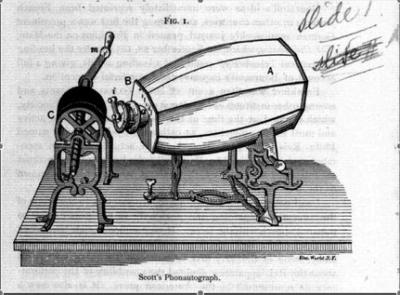
There's something extraordinary and wonderful about this. This voice, the name of whose owner was apparently not considered important enough to be recorded, preserved on nothing more substantial than soot on paper, all that remains of someone from a distant past, untouchable but made tantalisingly close by this tiny fragment. Something about the fragility of existence and the tenaciousness with which we cling to it.
Wednesday, December 05, 2007
Record company in good idea shock

Monday, November 26, 2007
On the Corner
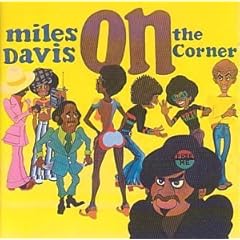
Its origins lie in Miles' realisation in the early '70s that jazz had been largely abandoned by young black kids, who were listening to Sly Stone and James Brown instead. He realised he needed to do something that would connect with them, speak to the kids on the street. So he made a funk album, of course. But being Miles, he couldn't make any old Stone-derived sound. He needed to bring something new to the party. And what he decided was the killer concept, that would bring his sound to the kids on the street was the ideas and processes of Karlheinz Stockhausen. Well, obviously.
I remember when I was a teenager first listening to Miles, and finding things like Bitches Brew bewildering, in a way probably only matched by Trout Mask Replica, another album it took me a long time to get my head round. But I always felt there was something in them, something that was just out of reach, that I needed to keep digging and find. Anything of real worth requires effort, because the effort makes the reward that much sweeter. So when Miles decides that what funk-jazz needs is the influence of the German avant-garde, god dammit, you've just got to go with it, because in the end you'll see he's right.
What Miles specifically takes from Stockhausen is his concept of space. On the Corner is an album that isn't much concerned with harmonic progressions, being on the surface a sequence of one-chord jams (or to be more accurate, cut and paste collages derived from one-chord jams). It's in the placing of the sounds that it gets its power, taking what could almost be described as a pointillist approach, short staccato phrases juxtaposed in varying combinations, never resting, always moving, but also static, creating a real sense of an environment in which we stay for a while. I'm reminded of the way Birtwistle describes many of his works, in terms of a single unchanging object viewed from changing perspectives.
If this sounds dauntingly intellectual, the effect on the ear is visceral and immediate (as is the actual music of Stockhausen and Birtwistle, if you ignore all the talking about it and just listen). Those foam-mouthed jazz-heads need to open up their perspectives and stop worrying about whether this is jazz or not. It's an extraordinary record that even now sounds like something that arrived in our midst from outer space.
Oh, did I mention that it's also damn funky?
Thursday, November 08, 2007
Raising Sand

Wednesday, October 17, 2007
We're not gonna Blake it.
The excellent Campaign for the prevention of Joss Stone draws my attention to some very naughty record company minions posting wildly enthusiastic reviews on Amazon for the yet to be released album by sub Il Divo* (if that's possible) blandtastic goons Blake. Go there and redress the balance. Together we can defeat this thing.
(Incidentally, how do clowns like these get away with describing themselves as "opera singers"? They wouldn't last five minutes on stage at Covent Garden.)
* Italian for "The Divs"
Friday, October 12, 2007
Time, please, gentlemen
I read on a crappy free paper on the train home that a survey of 3,000 people who downloaded the new Radiohead album reveals that a third of them paid nothing for it, but the band still got an average of £4 per copy, which puts them quids in on what they'd get if they were signed to a major label. Apparently 12 out of these 2000 paid over £40, which must mark them out as insane, as they could have got the lovely discbox like 351 others of the sample (and me) and got the download thrown in free.
Overall I think this makes the experiment a success, and a heartening one at that, as it suggests that far from the internet heralding the death of the business of recorded music, that people will pay up for music they have faith in. Great news for those producing good music, bad news for corporate companies churning out soulless crap. Which is exactly how it should be.
Wednesday, October 10, 2007
In Rainbows
So, how much did you fork out for the new Radiohead album? Me, being the nerd I am, I forked out the forty quid for the big exciting box with books and pictures and extra music and lovely vinyl. So I have a posh bit of product to look forward to in 6 weeks or so. In the meantime, there's the download version, which I was emailed the link for this morning.
And hurrah! It's absolutely brilliant! What immediately strikes me at the first listen is that they've managed to combine their experimentalism with their undoubted knack for a good pop song in the killer way they've been threatening to for a while. So you've got twisted dance beats, weird retro-futurist sounds, but also big guitars and tunes. So it sounds more than anything like a band.
I ummed and ah-ed for a while about whether to have the big box, or whether to go for the pay-what-you-want download only option. I wonder what I'd have paid if I'd done the latter? Of course it's tempting to pay nothing, but that just seems wrong to me. I vaguely wondered about getting the download and then if I liked it going the whole hog, but in the end I decided to put my faith in them to deliver, and they've come through for me.
I think the way they've released "In Rainbows" is a fascinating experiment (apparently there'll be a conventional CD release next year), and I hope they give us an idea of how many people downloaded and what most people paid. They're lucky enough to be in a position where they can take a risk like this, and if it works, it'll have huge consequences for the record business and bands' relations with record labels.
Wednesday, September 26, 2007
White Chalk

Hot on the heels of Joni Mitchell comes Polly Harvey with her latest album, White Chalk. And like Mitchell, Harvey is someone determined not to rest on her laurels. This album finds her abandoning her guitar for piano and an array of string instruments (by which I mean zithers and autoharps rather than violins), as well as abandoning her growly, bluesy voice for a much higher, purer tone, almost like a choirboy.
This is the sort of sound that chimes very well with all sorts of things I've been thinking of lately, so it may be that I'm feeling particularly receptive, but this album's absolutely brilliant. To step so far out of one's comfort zone is an achievement in itself, to do it with such aplomb and success is astonishing. It's also strangely uplifting, in a macabre sort of way. I've loved Polly's music for a very long time, and my admiration for her has grown pretty consistently with each new release, but it's rocketed with this one. To be able to come to this from "Rid of Me" all those years ago puts her into the same league as Joni.
Two wonderful albums from two fantastic musicians in one week is a rare treat. Just to reassure you that the world hasn't suddenly started making sense, there's a new Westlife album on the way. Can't win 'em all.
Tuesday, September 25, 2007
They paved paradise and put up a coffee shop
 It does seem odd - Joni Mitchell, countercultural icon, bringing out her album on the label of top corporate exploiticons Starbucks. But Mitchell of all people has earned the right to do what she damn well pleases, and in a way she's being just as stubborn and contrary as she always was. And the legend "© 2007 Joni Mitchell" reveals the reason she's decided to take her first new material for over a decade to the mocha-mongers; artistic freedom, and ownership of the result. After the things she said after her spectacular exit from the music business, it was never likely she'd want anything to do with a conventional record company again.
So Shine represents an unexpected return to a business she once described as "a cesspool". And it's a very welcome one, because this is a very fine album. It's an album that demands attention though - while it's much easier going than Mingus, it's decidedly quirky and unpredictable, Mitchell's latter day, huskier voice and jazz stylings being put up against often brittle arrangements, staccato wind chords and a palette that nods to pointillism. If I have one real complaint, it's that she uses synths rather than real wind instruments. There's an old-fashioned feel to many of the sounds here (maybe it's simply because after such a long time since her last compositions, she simply doesn't have any new equipment) but it only serves to heighten the individualism of the sound. A lot of reviews I've read note the serenity of the record, which contrasts with the overall theme of the record (that we're all going to hell in a handcart, and Joni told us so), but I think that's a simplistic view of an album that is admirably determined not to rest on its creator's laurels. There's an underlying tension that undercuts the surface calm.
"You don't know what you've got til it's gone", sings Joni in the startling (and effective) reworking of "Big Yellow Taxi". Sometimes you're lucky enough to get it back.
"You don't know what you've got til it's gone", sings Joni in the startling (and effective) reworking of "Big Yellow Taxi". Sometimes you're lucky enough to get it back.
Wednesday, August 22, 2007
A Wing and a Prayer
Reading this post made me think about some of the ideas I've been having lately about what music and/or composition is actually for. Especially this bit:
"it's a tremendous loss that nowadays most people solely consume music,
rather than try to make music themselves. "
I'm reminded of something Ives said: "Can there be any such thing as bad music?" There's such a huge amount of judgmentalism in music, especially classical music. People who sit around comparing different recordings of the same piece, rather than thinking about the piece itself. Who go to a live performance and compare it to an old recording (always unfavourably, of course). I feel sorry for such people. They are missing the point in a spectacular manner, dwelling in the tombs of their recordings when they could be out with the living.
An old colleague of mine used to say, "Professionalism is the enemy of music." And the more I dwell on this sentiment, the truer it seems. I've nothing against professional performing groups, but it seems very unhealthy that the audience is increasingly regarded as a passive absorber of product. Music should be something you do, not something you consume.
Take a stand. Buy a cheap instrument (you can pick up a ukulele for about 20 quid, and they're very easy to play) and make a noise with it. Sing along to your records. tap out a rhythm on your table. it doesn't matter what it sounds like. It just matters that it's a sound you're making.
Friday, July 27, 2007
The vinyl word
In between all this highfalutin Promming, I've been very much enjoying this series of articles in the Guardian by Joe Queenan looking at the origins of pop songs, full of the kind of inconsequential trivia that I find fascinating.
Thursday, July 26, 2007
Henze
There are some things that just seem to pass you by, and Hans Werner Henze has been one of them. I've long been aware of his existence, of course, and his position as one of the few significant composers to emerge from Germany since the war, as well as one not afraid to confront his homeland's past, but somehow his actual music has failed sink into my consciousness. So coming across a score of his Seventh Symphony while engaged in cataloguing the oversized score shelves in the library where I work* seemed to be a sign that I should have a listen, and I now wish I'd paid attention earlier. It's something of a shock to come across something so recent (he wrote it in 1983-4) that engages so directly and seriously, and without any ironic distancing, with the European symphonic tradition that stems from Haydn and Beethoven. All the more remarkable coming from a German composer, who must I suppose feel the weight of such a history even more than most of the rest of us. It's an immediately engaging piece, that's nevertheless clearly a weighty, meaty beast. If you like the sort of eclectic, not-quite-tonal style of such composers as Tippett (whose politics also find an echo in Henze), this is well worth a listen, and I shall certainly be hunting down more of his music.
One thing though: the CD cover is a truly horrible design. I know the sort of person most likely to buy a Henze CD probably isn't going to be put off or attracted by the cover, but really, couldn't they have made the effort?
* A startling number of these scores seem to come from the same two or three publishers, and be composed by people born within a few years of each other. A monument to a certain era in 20th century music...
Sunday, July 08, 2007
Rasputina: Oh Perilous World

Chances are, if you're in the U.K. you won't have heard Rasputina, although you may have heard a track of theirs that appeared in Buffy the Vampire Slayer. When I try to describe them to anyone, I struggle beyond "goth-pop cello band", which does them a great disservice, suggesting both a limited genre palette and a novelty element, neither of which is remotely true. Rather I should say that Rasputina mainstay Melora Creager has an idiosyncratic and singular vision, which she has pursued and refined through the course of five albums (plus an excellent solo mini-album last year).
Their last album, 2004's Frustration Plantation marked a breakthrough for these ears, with an expanded palette and refined songwriting producing Rasputina's most rounded work to date. Oh Perilous World builds on that fine album's sound world, as well as Melora's solo outing Perplexions last year. Many of the lyrics this time have been constructed using "found" sources, but the result seems to be pretty much the same as ever, namely oblique, mordant and witty. Rasputina offer a skewed, abstract take on the world around us that seems simultaneously to be entirely of its time and yet independent of any discernible trend. And in these days of identikit indie posers, that's something to be thankful for.
Subscribe to:
Posts (Atom)


