Thursday, April 03, 2008

chaos and beauty

Lou Reed's Metal Machine Music, one of the more remarkable albums of the seventies, has always had a special place in my heart. It's, in essence, an hour of feedback, and is often voted somewhere near the top of lists of the worst albums ever made. When I was a sullen pretentious teenager this clearly made it a cause to be championed in my own contrary way. Hell, Ian Curtis had once said it was his favourite album, and it was, y'know, really loud.

Actually, there was always more to it than that, but my appreciation of it has only grown over the years as I've gotten old enough to drop the posturing nonsense, and heard enough of the right sort of music to begin to appreciate the place it occupies in the scheme of things. It's stating the obvious that it's in part the extreme logical conclusion to what Reed did with John Cale in the Velvet Underground, but there are deeper roots in there, in Cale and original Velvets drummer Angus MacLise's earlier work with LaMonte Young's Theater of Eternal Music.
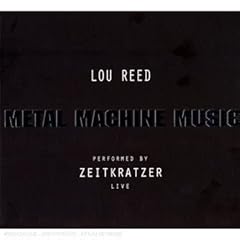
What got me thinking about it again was the remarkable CD by the German ensemble Zeitkratzer, who perform a painstakingly transcribed arrangement for acoustic instruments (joined in the latter stages by Reed himself on guitar). So what better way to follow this up by digging out the original for a comparison? And what better time to do this than a Thursday lunchtime?

The thing that strikes you coming back to it, is how un-atonal it is, in direct contradiction to its reputation. Reed knew this, of course - the deadpan sleeve note he specifies "avoidance of any type of atonality". The thing about feedback is, that it originates from the overtones in the source vibration, and so when you use specific open tunings, as Reed does to the guitars he used to record the album, you actually end up with something that has the sort of oblique tonal/modal feel that a lot of contemporary classical music references.

The other thing, quite unexpected if you're coming to it through its reputation, is that if you turn the volume down it's not harsh at all, simply a glittering web of melodies and harmonies, an energetic tumble of waves of notes dancing on the surface of a vast, deep ocean of drones.

It's always portrayed as a vicious, harsh, masculine "fuck you" record, but what keeps me coming back to it, and what should bring you to it, is the increasing realisation that it's a sensuous, beautiful piece of music. Try it with your sandwiches on a sunny day.
Wednesday, April 02, 2008

Let's go to work

Little time for blogging at the moment, as you may have noticed from the few and inconsequential posts lately. Well, I'm afraid you'll have to get used to that, because inane witterings about Doctor Who is about as good as it's likely to get in the immediate future. This is not in itself a bad thing, as it's at least partly down to the exciting thing that I'm now working on, of which I shall not speak, as talking about these things seems to have a tendency to kill them off in my mind. Maybe once you've expressed the thought behind it the need for the piece evaporates. Better to explain in retrospect, if at all. I will say there's an element of thinking about rhythm involved, in a different way to what I've done lately. All these months I've been worrying about my drained pool of ideas, wondering if I need to take a long hard look at things and reassess what I'm doing, and it turns out what I really needed was a few days off. There's a lesson for us all there.

Anyway, Doctor Who. I'm getting quite excited about that.

Monday, March 31, 2008

A nice night in

I know I'm probably too old to be excited by this sort of thing. but I am, so there.

Friday, March 28, 2008

Written in smoke

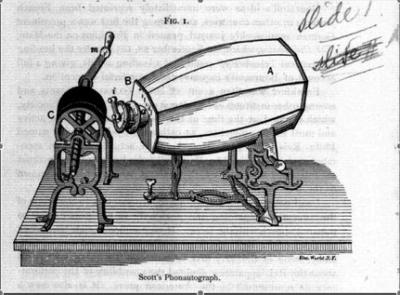
I was half-asleep at the time, so I didn't immediately realise what gave Charlotte Green such a fit of the giggles on the radio. It later transpired it was a comment overheard about a newly restored recording from 1860 - the earliest known recording of a human voice - sounding like a bee in a bottle.

There's something extraordinary and wonderful about this. This voice, the name of whose owner was apparently not considered important enough to be recorded, preserved on nothing more substantial than soot on paper, all that remains of someone from a distant past, untouchable but made tantalisingly close by this tiny fragment. Something about the fragility of existence and the tenaciousness with which we cling to it.

Tuesday, March 25, 2008

sea and sky


It can't last forever, of course it can't, there's too much crowding out the moments of stillness and repose for it to be otherwise. But that never stops you wishing that maybe one time it might.

Thursday, March 20, 2008

Glorious


When Adam and Eve were disposessed
Of the garden, hard by Heaven,
They planted another one down in the West -
'Twas Devon, 'Twas Devon, glorious Devon.


Off for some unseasonal sea. Back next week. Happy Easter!

Wednesday, March 19, 2008

Arthur C. Clarke 1917-2008

Anyone who grew up in the late 70s and early 80s will remember "Arthur C. Clarke's Mysterious World", a TV series in which Clarke fronted a series of articles investigating strange phenomena. It certainly made a deep impression on me; I was obsessed with Doctor Who (as were most small boys then) and all thing extraterrestrial, and the remarkable tales I saw presented were a huge meal for my ten-year-old imagination. I even got the big expensive tie-in book, and poured over its pages, filling my head with crystal skulls, mysterious explosions, ancient anomalous technology and alien visitors. It was also the first place I heard the name of Charles Fort, whose words currently head this blog, and whose wickedly playful philosophy has been a great influence on me.

Clarke's best known amongst the wider public, of course, for his novel and screenplay 2001: a space odyssey, and for predicting satellites with geostationary orbits, but he wrote a huge number of books, many of which I read avidly. His short stories always chimed with me most, filled with extraordinary imaginative speculation as to the future, which was nevertheless always perfectly grounded in contemporary science.

What I remember and treasure most from his stories, however, is its essential optimism. Clarke wasn't naive; he was certainly aware that human nature does not evolve as fast as our technological capability. But he always seemed to project the wonder of possibility, and the hope that for all our faults, in the end all things shall be well.

It doesn't strike me that he was the sort of person who'd want to be remembered in solemnity, and so here's something I also remember from TV relating to the great man in an entirely less serious way:


Tuesday, March 18, 2008

Swings and roundabouts

High point of the day: Remembering I'm only working three days this week.
Low point of the day: Realising that today is in fact Tuesday, not Wednesday.
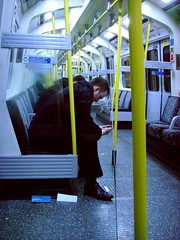
There goes the neighbourhood

Broxbourne, a quiet little town a few minutes' train ride from me (or a few more minutes on the bike I bought there) has previously been known only as the birthplace of the fine composer Elizabeth Maconchy. But eek! It has become the new home of Mr Murdoch's empire of hatred! When the Current Bun moves next door, it's time to call for escape route.

Monday, March 17, 2008

Chains at a molecular level

The sleepwalk to a police state continued at the weekend, with a call from Gary Pugh, director of forensic services at Scotland yard, for children to be added to the national DNA database.


It's really disturbing that someone fairly senior in the police force feels quite able to come out and, in essence, say that the population should be treated as suspects - he is, after all, suggesting that a child be put on not because of anything it might have done, but because of a possibility that it might in future do something. He says at one point:


'Fingerprints, somehow, are far less contentious,' he said. 'We have
children giving their fingerprints when they are borrowing books from a
library.'


What. The. Fuck?? Does this really happen?


Does this really happen?


AC Grayling eloquently dispatches the pernicious "nothing to hide, nothing to fear" argument today in the Guardian.


At a time when the Chinese government is trampling all over the rights (and bodies) of the Tibetans, we need to look to our own back yards and see what's happening here before we find ourselves at the mercy of rulers with no regard for our right to live our own lives.

Saturday, March 15, 2008

Set the controls for the heart of the Sun


Set the controls for the heart of the Sun
Originally uploaded by petemaskreplica.

Friday, March 14, 2008

Gustav Mauler

Strangely wonderful.

Thursday, March 13, 2008

Are conductors necessary?

A mention on the radio draws my attention to The Times pontificating about the need for conductors in the wake of an interview with Nigel Kennedy (are we back to calling him Nigel now? A couple of years ago he declared he wanted to be known as "Kennedy", presumably in imitation of Morrissey, Madonna, God, and other single-monikered celebs). It's an interesting question.

My own band probably wouldn't get through an extended piece unscathed, but we're operating on a different level to, say, the LSO, who I daresay could quite easily get to the end of a symphony without it falling apart. (Whether the performance would be worth hearing is another matter.) Plus KSO's purpose is in part educational, to broaden the knowledge and appreciation of music for both the players and our audience, which means that our conductor is working in part as a teacher as much as a baton waver.

Conductorless orchestras do exist; from what I gather the main difference is that because the approach to the music has to be decided amongst the band rather than being imposed by a single coordinator, it takes longer to rehearse. I suspect this is why stickless bands are unlikely to have much of a future beyond the relatively small forces involved in pre-(and indeed quite a lot of post-)19th century music, simply because the arguments between 30 people are going to be resolved much quicker than between 80. So, the argument in favour of conductors is essentially efficiency: it's more efficient to have one person in charge of rehearsing and shaping a piece than a group of people discussing it. And of course a pair of ears outside the band is useful, to make sure everyone's balancing well.

(Nigel) Kennedy's someone I've got a lot of time for - it's easy to forget that beneath the eccentricity/twattery lies a very fine musician - but I think he's over-stating the case. As the Times article points out, he's struggled to find anyone he can work with since Klaus Tennstedt.

(Incidentally, I'm disturbed by the comment on Radio 4's Front Row last night that (Nigel)'s (conductorless) new recording of the Beethoven Violin Concerto is slower than his old one with Tennstedt, which was so slow it's a wonder it's not still going on. Maybe he's hoping to make a breakthrough in physics by playing so slowly that time actually starts going backwards.)

The question of whether a single view of a piece or a collectively agreed one is better is a question worth pondering. Of course this does all tie in with the very idea of "interpretation", which is to a greater or lesser degree an excuse to justify playing the same old stuff over and over rather than finding something new for our ears, which goes to the heart of what the classical music industry's all about.

There are conductors who do bring something special to the table, but in truth they're rare birds. Mark Elder's a good example of someone who's worked with one band over many years (the Hallé) and has the kind of relationship with them now where he presumably knows them well enough to work with them rather than at them. Then there are the superstar jetsetters like Gergiev. And of course the huge numbers of journeymen who frankly do bugger all. The trouble is, there's a culture of insisting in so-called classical music that everything is the peak, the absolute elite, when the fact is there's a hell of a lot of the mediocre.

Could you put on a Mahler symphony without a conductor? I don't know. It'd be interesting finding out, though.

Tuesday, March 11, 2008

Mozartballs

Steph Waller believes she is the reincarnation of Mozart. She gives talks "in character" (and costume) to schoolkids about him, along with her partner Lynette Erwin, who claims to be the reincarnation of the first singer to play the role of Susanna (and alleged tryster with the composer) Anna Storace. Personally I think if I'd been subjected to this as a child I may have been too traumatised ever to listen to Mozart again, but maybe that's just me.

David Cope, meanwhile, has written a program that enables a computer to "compose" like Mozart. He persuades Steven Isserlis to play through a cello concerto written by this program. Isserlis confesses to developing a certain fondness for the work, despite it being "really bad". That's not just a professional opinion, by the way - my companion has no musical training at all, and she managed to recognise its awfulness, a jumble of classical cliches that fitted together in the way a random selection of clothes bought from charity shops might.

These are just some of the characters we encounter in the documentary film, Mozartballs, which was on BBC4 the other night, named after the sickly sweet chocolate balls known as "Mozartkugeln" that act as the most prominent evidence that there is nothing on this earth so tacky that the Viennese won't slap a picture of Mozart on it and sell you.

It's quite an entertaining film, and not simply in a "look at the nutters!" way. To an English mindset the title brings connotations of Private Eye, but this is an American film, and hence lacking the acid that might imply. Rather, it's an affectionate portrait of some eccentric people who've made Mozart the focus of their obsession. Whether this says something about the continuing power Mozart's myth holds over us or the desperate desire of us all to bask in associated glory I don't know, but rather than mocking the film's subjects I find myself warming to them. We live in such a drab, conformist world in so many ways. Who can blame someone for wanting to be Mozart?

Monday, March 10, 2008

Empire of the senseless

Interesting times for music publishing.

Whether EMI will still want to buy Boosey's once they've seen what sort of state it's in remains to be seen - it doesn't bode well if the current owners really have been trying to get rid of it since shortly after they bought it.

Boosey and Hawkes is a company, like most music publishers, that has grown complacent and reliant on the exploitation of some big names it was lucky enough to acquire rather than trying to create a future for the art form it purports to represent. It'd be nice to think a new owner might begin to reverse this trend, but I can't say I feel confident that a bunch of asset-strippers, which is essentially what Guy Hands' business is, will have any new approach to the selling of classical music.

Notes & Queries

A trombonist and me in the pub after the concert on Saturday:

"Great programmes notes!"
"Thanks!"
"Not much about music in them, is there?"
"Well, writing about music's a waste of time, really."

And it is.

Well, I should qualify that. There's plenty to be had out of the study of music, for performers and composers. But when you're writing for an audience the rules are different, I think. Maybe once upon a time you could have assumed a certain level of knowledge about how a piece of so-called-classical music works, but the fact is that you can't anymore. I write programme notes for intelligent people who have no musical education. I could witter on about sonata forms or whatever happens to be the bottle tonight's wine is poured into, but for those who know about such things it's unnecessary, and for those who don't it's a confusion. All those descriptions of what happens in the piece you read in most programmes - what's the point? I don't want to be told the plot before I read a book. But it does help to have the scene set, and as a lot of the time we're talking about something that was written in a different age or society, it's good to know the context in which it was created. I usually mention something that happens near the end, so that the audience knows it's nearly done. But really my ideal programme note wouldn't talk about the music at all. Long-winded technical descriptions put the layman off, make it seem an esoteric exercise that you can't begin to understand without a degree. Music should be experienced viscerally.

In the case of Shostakovich's Fourth Symphony, the political context of its creation is vital to understanding the work, but that's true of anything. No composer exists in a vacuum. To put a work in context doesn't diminish its universality (as some try to claim, particularly in the case of Shostakovich). When making a case, one argues from the specific to the general, and knowing how, when and why DDS composed his Fourth can only help in understanding its wider relevance today.

These thoughts are with me regularly as I write, of course, but they also come to mind this morning reading the comments on Pliable's post about the review of Alex Ross's book on Radio 3. It's true that there's not much in the way of discussion of music in the book, but is that its purpose? My impression is that the point of it is to put 20th century composers into a social context, something which has been largely lacking. I find the earlier part of the book more successful in this than the latter - although perhaps that simply reflects the extent to which the post-war composers abdicated social responsibility? It's also true that Ross's story peters out sometime in the early 70s, but perhaps with music since then it is too soon to tell. Certainly, the book isn't as wonderful as it's been made out to be - what could live up to such hype? - but Ross has attempted to put 20th century composers before a general audience, and that's something to be admired and encouraged.

Thursday, March 06, 2008

A powerful beat

We are a product of our environment. But our environment is also in part a product of us. I'm an untidy person. I create the mess that surrounds me. And yet, when I get around to tidying it up, I become aware of how much the mess around me creates untidiness in my mind, that turns a creatively non-sequential mindset slowly into an impenetrable thicket, so cluttered with detritus that I can no longer fight my way to the important matters buried within. And this process creates a feedback loop, so that the thicket of thought builds up a dam against action, the mess in the physical world builds and thus feeds the mess in the imaginative world, until something breaks and insists this will not do. And once the clutter begins to disappear somehow the mind begins to clear also, and one begins to think again of productive thought rather than the tiny, time-strapped whirring that dominates all too often.

There's nothing wrong with this cycle; it's a rhythm, and life needs a rhythm, sometimes simple, sometimes complex, and the simple rhythm must build to complexity and the complexity must in its turn give way to simplicity. It's just a shame that the moment of Nothing that acts as the agent of this change too often arouses out of imposition (of illness, say), rather than being allowed to emerge of its own will. Or is the illness simply a manifestation of this need occasionally to stop?

Wednesday, March 05, 2008

Politician may not actually know what she's talking about shock

The debate about the speech that Margaret Hodge gave yesterday rumbles on. And proves that for most people, the Last Night of the proms, the entire proms season and the entire range of what we call" Classical Music" are all interchangeable. Now that's what you call an image problem.

Hodge's own online diary, meanwhile, praised the Proms mightily last September. There's bound to be a suspicion that this proves that she' s simply a vacuous media tart who'll say whatever needs to be said to get some attention (I see more than one person has raised the spectre of Zhdanov), but is it just me or do those diary entries talking about operas and the Vienna Phil read like they've been cribbed from some bluffer's guide to classical music-type book? I'm now confused: is she ignorant or hypocritical?

Tuesday, March 04, 2008

Minister in ill-judged comment shock

Way Out
My heart sinks every time a politician offers an opinion on the Arts, and today's no exception as I read Margaret Hodge's reported comments on the Proms. Whether she's talking about the whole season or just the Last Night is being debated in a surprisingly well mannered discussion on the Grauniad "blogs" ( normally a hotbed of hate and ignorance way off the image of Grauniad readers as woolly liberal mung bean munchers), and of course there are less literate discussions going on, as well as the odd person happy to hitch her remarks to their own Beeb-bashing.

Hodge's words are of course flimflam, that show no knowledge or love of the subject at hand but an addiction to meaningless soundbites (pretty much what you'd expect from this government). It's interesting how quickly Downing Street seems to have intervened to put the can on the story - Hodge was booked to appear on Radio 4's The World At One, but at the last minute "something came up", and so we had to put up with Nicholas Kenyon waffling away.

I'm certainly not going to suggest that there's nothing that needs to be improved about the Proms - there's plenty - but this sort of thing really isn't going to start a sensible or useful debate about that. Rather, it's a sop, the Proms being a lazy shorthand (because of course to most people, the Last Night is the Proms, and indeed all classical music) for a certain type of white middle class idea of "culture". The minister's ill-thought out half-ideas about "inclusivity" and this governments obsession with a "British national identity" is fuelled partly by the prime minister's determination to make us forget that he's Scottish, and partly by a hatred of anything that might emphasise individuality. Hodge's singling out of the Proms is meaningless; it's a lazy, convenient target rather than any cogent analysis of contemporary culture. The only thing more depressing is David "Dave" Cameron's equally fatuous response. Let us not forget that politicians of all hues are rarely genuinely interested in the Arts, and never, ever interested in anything other than the lowest common denominator.

golden geese on life support

You can never take anything for granted in this world, and to prove it, the European Union is looking at extending sound copyright terms, against the conclusions of the Gowers Review. Read more here, and sign the petition. Copyright is an important way of protecting the livelihoods of creative artists, but for cultural activity to thrive, it's also important that works be allowed to pass into the public domain, so that we can use the achievements of the past to build the future sound.

Photo taken from Racefan's Picassa album.

Friday, February 29, 2008

Words written in the wind and the running water

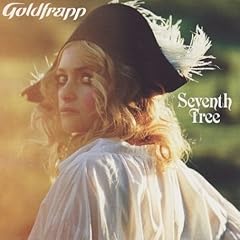
I've been listening to Goldfrapp's new album Seventh Tree, and thotroughly enjoying it. Who'd have thought all those years ago when they had their first album out, which I dismissed as just another dodgy trip hop knock-off, that they'd become one of those bands you'd get really quite excited about? What I find particularly interesting is that, underneath the folky trappings, stylistically it's recognisably the same band as the last couple of albums, the glam stomp of old absorbed into the new style rather than jettisoned. I also like the fact that they've managed to produce something that's very evocative of that Wicker Man style psychedelic-folk thing without being a rather tiresome Wicker Man-derived album.

The best thing (at the moment, anyway) for me, though, is the lyrics. Although by that I don't mean what you think I do.

Take the first track, "Clowns". Reading the lyric booklet in my nice posh special edition blah blah, I see the opening line is "Only clowns would play with those balloons." Only that's not what I hear. What I hear is more like "Only cloeooayeedohmmmaooooo." My theory is that Alison's approached the lyric writing via the method of doing some nice sounding vocalising, and then scribbling down something that it could plausibly be. And this is a Very Good Thing.

Because that's pretty much how I hear lyrics anyhow. I've never been very good at remembering, or even hearing, words beyond the odd pertinent line, even Dylan. Where some people sit about trying to deduce the inner meaning of "Subterranean Homesick Blues", I just enjoy the sounds of the words. I don't really care what they mean, or even if they mean anything. What matters is the feel conveyed by them, and that's got little to do with syntax. This is demonstrated perfectly by the greatest lyric ever penned in the history of rock and pop: "Awop-bop-a-loo-mop alop-bam-boom!"

Ships that pass in the night*

Just as the tube doors close at Oxford Circus, a gangling figure crashes through them and swerves past my cello straight into the last untaken seat, it's Bobby Gillespie. I wonder if anyone else recognises him? I resist the temptation to ask him "Are you Bobby Gillespie?". Because that would make me a wanker. Although somewhere in the back of my mind a scenario presents itself that he'll be getting of at my stop, we'll start chatting and the epic collaboration between us will be born. He gets off at Notting Hill Gate. Probably just as well.


*I say night. Obviously it was the morning. But it was underground, where it may as well be night.

Thursday, February 28, 2008

reissue, repackage

All change at the coffee bar. They now proudly advertise that all their coffee is free trade, the price of the coffee has actually gone down, and "more refurbishments soon!" are promised. There seems to be a heavy determination to give the impression of a bright new dawn.

On the other hand, all the staff who worked there until yesterday seem to have been disappeared, so I find myself, half-asleep, having to ask for a small cappuccino and yes could I have chocolate on please, where previously a bleary smile was all that was needed. There seem to be about twice as many people behind the counter, and yet the queue moves much more slowly than it used to even with one person serving.
This I suppose will improve with time as the new people get used to the surroundings and get to know their customers. I certainly hope the coffee improves - it was noticeably less good than yesterday. By the time I reach my desk there is no froth at all, which makes me wonder if it can really be called cappuccino any more.
The croisants are now smaller, but better - not necessarily a good sign. I've never found any coffee house that managed to serve both good coffee and good pastries. This suggests the downturn in the beverage is to stay.

There must be a re-branding mania at large - this week we commuters down the Lee Valley have been continually reminded that we are no longer on a "One" service, but in the brave new world of "National Express".

This is all flim-flam; it's the same old company, the same old trains, just with new logos plastered over the old. I consider the question of whether a new coat can change the person inside.

Wednesday, February 27, 2008

Walls come tumbling down (or not)

You'd think the sky had fallen on our heads. Personally I slept right through it. Maybe I'm just insensitive. Where's Charlton Heston when you need him?

Monday, February 25, 2008

Neckwear for second childhood

It's a good and necessary thing to have goals, and it occurs to me that I'm sorely in need of an objective or two at the moment.

I don't believe, however, that the tasks one sets oneself need have anything directly to do with one's grander ambitions - in fact I've increasingly come to the conclusion that making grand plans is all well and good, but you've got to have some sort of goal that you'll achieve in the short term, otherwise you end up adrift on a floe of daydreams.

I have thus decided that this year, I will learn to knit, and make Tom Baker's scarf.

When I was 6 or 7 I had a very long scarf (well, it seemed very long to me at the time; it'd probably barely get round my neck now) that I wore, which made me actually become the Doctor. It didn't matter that the stripes weren't exactly the same as the one on telly then. As the years pass, however, imagination begins to seize up and won't get going without a good prod, and so now just having a long stripy scarf won't do - it has to be the right stripy scarf.

I wonder if adulthood isn't a matter of putting away childish things, but more of an opportunity to accrue the childish things you couldn't get hold of because you were only a child.

Now, I must make the momentous decision: which scarf should I make? The original model, the replacement that came along a few series later when the first one had had one too many bits shot off by daleks and the like (which I guess is the one I really remember, as it coincides with my getting old enough to become really obsessed with the show) or the burgundy one from Tom's last season, which came in with the shirt with question marks on the collar that I associate with the beginning of the slide into 80s awfulness?


Thursday, February 21, 2008

The extraordinary continuing non-shitness of Torchwood

I mean, it's all nonsense, of course, but it's now watchable nonsense. And who couldn't love seeing Jim Robinson Out Of Neighbours turn to Evil Science Beyond His Control before killing Owen to DEATH? And Martha too! Who even managed to get through the episode without shagging any of them! Which must be a first in the 'wood.

I hope Scott and Charlene are hanging their heads in shame, that their rebellious shenanigans drove poor old Jim to this.

Wednesday, February 20, 2008

It ain't what you do, it's the way that you do it

Interesting post over at Kyle Gann's blog touching upon issues of notation.

Now you may think this sort of thing is pure composer-nerd territory, but think about it for a minute: a "classical" composer is in a strange position in that he or she is dependent on others to realise his work; all the great ideas in the world are worth nothing if you can't figure out an effective way to communicate them to the performer so he or she can attempt to convey them to the audience (which you hope will consist of a least a few more people than you and your mates).

I sometimes wonder if all the exciting notation software we have available to us these days isn't stopping composers from really thinking about how they write things down. On the other hand, fancy clever notation can be a smokescreen to mask the lack of substance in a piece; there's a terrible danger that the means become the ends.

It's a long, thin, high tightrope to walk: Kyle's got a point about professional musicians' aversion to anything that makes them have to stop and think, but at the same time it's important for the composer to put his instructions across as clearly as possible. Morton Feldman's a great example of a composer who writes his music out in a fashion that often sems to defy logic; but his idiosyncratic presentation does convey an important idea about the music and how one should approach it, in a way that a more superficially straightforward approach wouldn't. I guess the bottom line is, if you're going to write something in an unorthadox way, that's fine, but make sure you know why you're writing it like that. And the same goes if you're writing it just how your teacher told you to.

Sunday, February 17, 2008

Culture - to go!

This article by Armando Iannucci in the Observer today is thought-provoking stuff, one of the best bits of journalism he's written. Of course kids won't just stumble upon "culture" without being introduced to it, but when a government starts declaring quotas for arts in school I get suspicious, not least because (apart from the question of where these 5 hours are going to fit in and what can be usefully achieved in that time anyway) there's a bit of me that wonders if this sort of thing isn't a substitute for proper education rather than an impetus to it. What kids need to be introduced to is the idea that there are things in the world that require effort, and that they are worth that effort. I can't see how what they're suggesting will achieve this. Plonking a child in front of an orchestra isn't enough.

Thursday, February 14, 2008

Happy Valentine's Day!


A heartwarming tale of romance, stolen moments and utter idiocy for the most romantic day of the year. As seen in Classical Music's guide to music summer schools, out now. Play nicely and take precautions, kids.

Wednesday, February 13, 2008

The Image Game

Some time ago I found myself in the strange position of being offered money to draw comics, not something I ever thought would happen. The first fruits of that job are in the public eye now, and as the Classical Music Competitions supplement has now been out for a bit, I thought I'd post the strip I drew for it. The second one, for the Summer Shools supplement is just out, and the third, for the Music Festivals one is due in May. Well worth getting if you have any kind of interest in those subjects, and the strips look lovely on the page.

It's an odd feeling, seeing something I drew in print on nice glossy paper in a magazine, a strange mixture of excitement and terror, but one I could get used to, I think.

I might put up the second one tomorrow, it'd be appropriate given the date, ha-ha.

Tuesday, February 12, 2008

Lost Girls

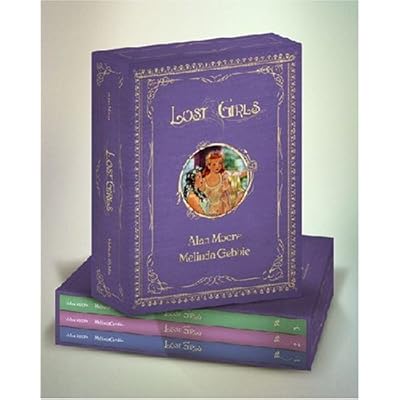
It's not every day I can say I spent 50 quid on pornography, but in buying Alan Moore and Melinda Gebbie's Lost Girls the other day, that's exactly what I did. Three hardback volumes of it, in a slipcase. A Tijuana Bible it ain't. Due to a copyright wrangle (one of the characters is from Peter Pan, whose copyright expired on January 1st this year) it's only recently become available on this side of the Atlantic.

Lost Girls is Moore's self-declared attempt to produce intelligent porn, and there's no doubt that it's hardcore - pretty much every page contains explicit sex, quite a bit of it illegal (and the rest oughtta be! I thangyew). The scenario presents us with three famous fictional women from fantasy novels - Alice (of Wonderland), Wendy (of Never Never Land) and Dorothy (of Oz), who meet in a hotel in Europoe on the eve of the First World war, and proceed to tell each other their stories while engaging in all manner of congress*. Thus the three tales from which the characters originate are recast as Freudian metaphors for sexual awakening. Moore is certainly not the first to consider these works of children's literature in this way, but to be quite so, um, uncensored about it is, er, a novelty.


This is by a country mile the most controversial thing Moore's ever put his name to, but it's a serious, thought-provoking book that argues passionately for freedom of thought and expression - only madmen and magistrates can't distinguish between fantasy and the real world, he states - and makes clear in its closing pages that there are real obscenities in the world that make a mockery of our uncomfortable reaction to sexual fantasy.

Whether it really works as pornography, however, is open to question. For all the organs shown in action, Lost Girls is a cerebral work, concerned with how society polices our thoughts and actions, with how we define the limits to what we consider acceptable or immoral, with the sexual undertow that exists within all human endeavour. It's hard to imagine it'll be very useful to anyone who just wants a quick one off the wrist.

Here's an interview with affable Al on Lost Girls:
Part One
Part Two

And here's the great man himself speaking on the subject in moving image form:


*For the musos out there, there's a thoroughly entertaining and improbable threesome that takes place during the first performance of The Rite of Spring, all the rest of the audience presumably too busy being horrified by the action on stage to notice the three women shagging in the stalls.

Thursday, February 07, 2008

Daniel Barenboim plays Beethoven (Royal Festival Hall)

There are so many things I could say about Barenboim's playing. It's unshowy, deeply humane and puts music above shallow showmanship at all times. When at the end of the Appassionata Sonata he works himself into such a frenzy that he pounds the pedals and the floor violently with his feet it comes across as the perfectly natural unleashing of tension and passion that he has held carefully in check up till now. It's a pleasure to hear him play the two op. 49 sonatas, the "easy" ones that even I can (or at least used to be able to) have a stab at. There's no danger of being overwhelmed by sheer technique, as you would in one of the more note-stuffed sonatas, and yet of course you see his brilliant technical abilities all the more, and see it entirely in a musical light. I come away thiunking I'm glad I saw him play these simple (but not simplistic) pieces rather than one of the phenominally difficult warhorses that you can hear any pro playing most weeks.

I could also talk about his lack of pomposity or self-importance, his air of absolute straightforwardness and openness, the wonderful intimacy created by his having audience all around him, rather than being perched in front of us on a stage, unreachable and separate.

But the thing I keep noticing is the handkerchief. He mops his brow with it, then throws it into the piano, then retrieves it again later. There's one point where he does this in the middle of a movement, while only his right hand is occupied with the keyboard, which lends a brief nervousness to my mood. But mostly the handkerchief stays out of sight, only momentarily appearing between sonatas. It's such a mundane thing, but it sticks with me, and somehow seems to stand for what it is about him that makes this such a satisfying evening, filled with insight and humanity.

Tuesday, February 05, 2008

Does Norman Lebrecht exist?

Daniel Wolf links to a prime cut of Norman Lebrecht, full of the factual accuracy that afficionados of Stormin' Norman have come to expect. Daniel expresses surprise that Norm, a professional newspaper columnist, could display such a level of ignorance about a major figure in a field about which he professes to be expert, and, the general disregard hacks have in this country for the truth aside, he's got a point. After all, if that were the case, then given Lebrecht's dismissals of bloggers as a bunch of amateurs who don't get their facts right, that would make him a big fat hypocite, and surely he can't be that? So it goes that as I read the hairy blusterer's attack on Stockhausen with the bluntest of hatchets, the thought occurs to me: Maybe Norman Lebrecht dosn't really exist.

Think about it: there have been cases before of spoof columnists who paraded a ludicrous series of columns before the public, who nevertheless took it seriously; Chris Morris's suicide journalist in the Observer springs to mind. If you were to create a satirical character, a music journalist filled with utter pomposity and egomania, entirely convinced of his own correctness despite his inability to do basic research properly, who assumes a stance of integrity and moral probity even as he trawls through the gutter looking for his next scurrilous bit of gossip, what would you come up with?

So, let others deride his ignorance and self-importance. I say, praise him! Praise the nameless shadow who has created one of the greatest caricatures of our age! Laudibus regina Jocasta in pestilentibus Thebis!

(It is of course possible, though highly unlikely I think, that I'm wrong, and Norm is a real person. If anyone can show me satisfactory evidence that Lebrecht does exist, and is not a fictional entity, I shall buy them a pint, or equivalent drink of their choice. Bet you can't.)

Thursday, January 31, 2008

Beadle: No longer about

You may remember him as that smug git on all those rotten 80s tv shows, but something less well known about Jeremy Beadle is that as organiser of the Bickershaw Festival in 1972 he was resonsible for bringing Captain Beefheart to the UK for the first time. Because of this, I can forgive him for Henry Kelly.

Addendum: The internet throws up some strange connections. Henry Kelly went on from Game for a Laugh to present seminal daytime Euro-quiz Going for Gold, essential viewing for all students and unemployed layabouts in the early 90s, whose cheesy, yet indelibly etched onto my mind, theme song was written by the bloke who went on to score Ridley Scott's Gladiator.

Here's Johnny

Johnny Hicklenton drew some of the most distinctive, visceral, and plain old bizarre art you could hope to have seen in the pages of 2000ad in the late 80s and early 90s. At a time when the entire industry seemed to be in the grip of Bisley clones churning out brown painted art, he stood out as someone doing something utterly unlike anything else around, and there's still really no-one quite like him.
Johnny's also got Multiple Sclerosis, and can't walk anymore. Fortunately he can still draw, but he knows it's a matter of time before that's taken from him too.
Fortunately Johnny's too much of a fighter to sit back and accept this, and one of the ways he's fightiong back against this horrible disease is by working with Animal Monday to make a film about his condition, "Here's Johnny", the first screening of which I attended last night at the Science Museum's Dana Centre. It's a powerful piece that pulls no punches in letting you know what the (often uncomforatbly personal) effects of multiple sclerosis are, not just physically but pstychologically. This coukld make for uncomfortable viewing, but it transcends the awfulnes of its subject matter simply by the fact that Johnny's such an irrepressible, tenacious and funny man. It's being screened at Sight and Sound in Austen next month, whether or not it gets a cinema release remains to be seen, but as channel 4 have part-funded its making it'll doubtless be coming to a tv screen soon, and you really should keep an eye out for it and make sure you see it, because it's a provocative and thoughtful piece of film-making, the sort of thing you used to see all the time on Channel 4 before they gave themselves over to Wife Swap and Big Brother.
There's an interview with Johnny here.


Wednesday, January 30, 2008

Robyn Hitchcock / Rasputina (Queen ElizabethHall)

One of the things about getting older is that your faculties, contrary to what you might expect, appear to disappear suddenly rather than just slowly, imperceptibly fading away. So I find that my memory has deteriorated rapidly over the last few years, and while I've always found it much easier to recognise a piece of music than name it, at this stage any connection between notes and titles seems as tenuous as it can be. This is why I never speak of such things as set lists. So you may, if it amuses you, take these posts as an essay in the foothills of senility.

Anyway, the Queen Elizabeth Hall in front of an audience who are mostly waiting for someone else who they've actually heard of to come on is of course a very different proposition to headlining at the Windmill, and Rasputina seemed at first here to be pursuing their more explicitly "chamber" side at first, easy on the pedals and steady on the tempi, less of the banter. Something seems to gel when "Saline the Salt Lake Queen" appears and I think by the end they won over some of the unconverted at least. It was a good performance, although it was never going to be quite as special as standing mere inches from the band in a small room. The two audiences remind me of the two Londons; one intimate, friendly, eager; the other cosmopolitan, standoffish, reserved. They're a great band, as individual in their way as is the headliner, and I hope they'll be back on these shores before very long, and welcomed by an increasing crowd (although a selfish part of me would like that crowd to be small enough to fit in the back of a pub).

Robyn Hitchcock's probably better in a pub too, but as I haven't seen him in that context I've no way of making the comparison. He's on home turf, of course, and playing to a crowd who have paid to see him, and playing an old favourite of an album, and he's got them in the palm of his hand, and can banter til the cows come home, and does. It's a relaxed set, and doesn't seem anything like the 90-odd minutes it transpires it took once I emerge into the foyer and look at my watch.

I could mention Syd Barrett and Vivian Stanshall and that whole pantheon of English eccentrics and surrealists he belongs to, that stretches back way beyond Dali and his ilk to the real origins of surrealism, Edward Lear and Lewis Carroll. But building up a legend isn't really what he's about. it's mostly quiet, unassuming music that doesn't need to declare its worth, and is all the more affecting for it. There's a simple joy that's easy to hear, much harder to put across effectively, the art that's all the more artful for its apparent artlessness.

Addendum: a man like Robyn H attracts a certain level of punter, among those present was none other than Nick Lowe. And Adam from TV's Adam and Joe. Which is quite exciting. But not as exciting as Nick Lowe. Sorry, Adam.

Tuesday, January 29, 2008

Between thought and expression


In between two concerts of cranked-up cellos, here's something quiet, as silence always hovers between the notes: an excellent essay on Morton Feldman by Kyle Gann.

Rasputina (Windmill, Brixton)

I've been waiting a long time for this one. Not as long as the girl who ended up rammed next to me (in the nicest possible way) comparing notes on our favourite Rasputina albums, who'd been waiting ten years to see them live. I've only been waiting about five. But it's quite long enough.

First, though, we have rayOn (eccentric typography preserved here, I've got a soft spot for that sort of thing). They start off lively, but before the first song is over the guitarist's broken a string. They do what has to be done: make a bad pun about their "rocky" start and play a slow number to give him a chance to replace it (although it'd have been more fun to make do with five strings. After all, George Formby managed with four). I like this band. Back in Birmingham we have a grand tradition of fabric-monikered bands (Felt, Denim*) which immediately warms me to them, and they play a fun set. They're not going to set the world alight, but they look a bit long in the tooth to be seriously entertaining thoughts of rock 'n' roll stardom, and you know what? Sometimes being a decent band in the back of a pub is enough.

As soon as they finish, a crowd of goths floats forward. It's a marvellous sight, and takes me back to the early 80s, but it does mean I can't see a damn thing. Rasputina's mainstay Melora Creager is a thoughtful soul, however, and persuades those at the front to sit on the floor so the rest of us can see them. I manage to sidle round the side so that I have a pretty good ringside view, and am only slightly in Sarah Bowman's way as she takes her cello onstage.

Rasputina really could be playing somewhere other than the back of a pub (the girl I'm next to and I are both surprised that we're seeing them here rather than the Brixton Academy, and in fact they'll be at the grander surroundings of the QueenElizabeth Hall tomorrow night, supporting Robyn Hitchcock), but I'm very glad they're here, because there's a cosiness in a small venue you'll never get anywhere bigger, and Melora's dry wit goes down well in an intimate setting like this. American bands always seem to do things like banter much better than most British groups, maybe they just have a better tradition of playing to the audience to draw on than we do. Rasputina have an arrestingly individual aesthetic, and all the bucketloads of charisma necessary to bring that to life on stage, Melora and Sarah's voices and playing perfectly attuned, Melora's between song chat is very funny, and the whole thing is ably underpinned by Jonathon's driving drumming. (Incidentally, and utterly irrelevantly, Jonathon is really, really tall. I kind of expected him to look as he does, like Alan Moore might have done if all those years ago he'd decided to research Swamp Thing by going to live on Gumbo in a Louisiana swamp, but I really wasn't prepared for his remarkable distance from the floor.) At one point They launch into a heartfelt tribute to Sir Mixalot, which touches all our hearts.

They play for a full hour, and it's a terrible wrench to have to run out as they're playing their last song in order not to miss the train home. I'll be seeing them again tomorrow in the very different environment of the Queen Elizabeth Hall, and it'll be very interesting to see how they come across there.

You wait ages for a rocking cello band to come over from America, and then they do do two gigs at once. And even before the second, I'm already hoping it won't be too long before they're back here again. And if it does all come to nothing with the band (heaven forbid) Melora's got a bright alternative future in stand-up.


*Felt and Denim are arguably two manifestations of the same band, which would make this a grand tradition of one.

Sunday, January 27, 2008

Scaledown, King & Queen, 25 January

Good intentions butter no parsnips, I'm told, and having determined after the last time I went to a Scaledown night to get along to another really,really soon, I find myself here, almost exactly a year later. So much later, in fact that one of the acts tonight is making a return visit to the Scaled Down world. Still, I made it eventually, and this year I'm definitely going to get along to another one in less than a year's time.

So anyway, this time we had another varied menu of sounds. It's the sort of evening where you're unlikely to like everything, but you're bound to like something, and so it proved. After the customary turn by hosts Mark Braby and Andy Coules - a unique take on "Smash it Up" by the Damned - we have some entertaining spoken word stuff from saxophonist Mark Norton, of which the funnier poems are the better, not a million miles from John Hegley territory. Next up is Dogs & Stuff, a duo who somehow put me in mind of Flight of the Conchords. They're good fun, although they make the fatal error of putting their best stuff at the start of the set, so that after a song called "Monkeys v Robots" (Monkeys! Robots! How can you go wrong?) and a song featuring the wearing of a toy octopus on the head, the rest can only seem dull in comparison. Still, I saw a man with an octopus on his head, so I am pleased.

Next up is Martin White, of whom I've spoken before, so I shall simply say that he was his usual thoroughly entertaining self, and gave us a preview of some songs from a new musical he's writing about a 19th century German flea with magic contact lenses (or something).

Hong Kong in the 60s is a trio plying a C-86/lo-fi electronica type sound, which you may find intriguingly gentle or just fey, depending on whether you like it or not. I wasn't sure at first, but I found myself warming to it fairly quickly and by the end of their set was happy to let it wash over me in its unobtrusive way. And they do good badges too, which is an important thing, I think.

Finally is John Ellis, former guitarist with the Vibrators and the Stranglers, whose pedal and ebow-driven guitar noodling just didn't really do it for me, I'm afraid (and that's mild compared to what my companion said. She really didn't like it). But it doesn't matter, because I heard plenty of stuff I did like, and had a good time. Which is of course what it's all about.

The next Scaledown's on 22nd February, and I'm going to be there, definitely, honest.

I did take pictures of everyone, by the way, it's just they didn't come out very well. It's difficult taking photos in a dark room without a flash.

By the way, the Scaledown boys have moved into the world of recording, and I picked up their first release, a lovely 7" single by a band called Pocket. Get it at the Orchestra Pit.

Friday, January 25, 2008

Och aye!

Possibly not the Burns we celebrate on Burns Night.

Happy Burns Night! Here's a poem.


To A Mouse.


On turning her up in her nest with the plough, November 1785.


Wee, sleekit, cowrin, tim'rous beastie,
O, what a panic's in thy breastie!
Thou need na start awa sae hasty
Wi bickering brattle!
I wad be laith to rin an' chase thee,
Wi' murdering pattle.

I'm truly sorry man's dominion
Has broken Nature's social union,
An' justifies that ill opinion
Which makes thee startle
At me, thy poor, earth born companion
An' fellow mortal!

I doubt na, whyles, but thou may thieve;
What then? poor beastie, thou maun live!
A daimen icker in a thrave
'S a sma' request;
I'll get a blessin wi' the lave,
An' never miss't.

Thy wee-bit housie, too, in ruin!
It's silly wa's the win's are strewin!
An' naething, now, to big a new ane,
O' foggage green!
An' bleak December's win's ensuin,
Baith snell an' keen!

Thou saw the fields laid bare an' waste,
An' weary winter comin fast,
An' cozie here, beneath the blast,
Thou thought to dwell,
Till crash! the cruel coulter past
Out thro' thy cell.

That wee bit heap o' leaves an' stibble,
Has cost thee monie a weary nibble!
Now thou's turned out, for a' thy trouble,
But house or hald,
To thole the winter's sleety dribble,
An' cranreuch cauld.

But Mousie, thou art no thy lane,
In proving foresight may be vain:
The best laid schemes o' mice an' men
Gang aft agley,
An' lea'e us nought but grief an' pain,
For promis'd joy!

Still thou are blest, compared wi' me!
The present only toucheth thee:
But och! I backward cast my e'e,
On prospects drear!
An' forward, tho' I canna see,
I guess an' fear!

Thursday, January 24, 2008

The Great and Good

Playing MartinĹŻ's Fantaisies Symphoniques got me thinking about him, and his place in the greater scheme of things. This is partly a matter of his relative obscurity, which baffles me (as it does in the case of Nielsen), as i find it hard to understand why he's not a massively more popular or played composer. Possibly not more popular because not more played, of course, and given the timidity of much concert programming, not more played because not more popular - the perennial Catch-22.

There's a strange thing in classical music, I suppose because it leans on the past more than any other art form, of an insistence when talking about composers talking up their "genius". It's perfectly possible to talk of, say, Dickens as a great novelist while acknowledging his faults (all that sentimental Tiny Tim nonsense, for example), but we like to keep quiet about the second rate pieces Beethoven churned out amongst the jewels (such as the rotten Battle Symphony) . It's as though we're scared that if we admit any weakness in our musical gods, the entire edifice will come crashing down around our ears.

MartinĹŻ is a really good (and underrated) composer, and amazingly consistent for someone so prolific, but he's not a Great Composer. I think this is something to do with the fact that he's almost completely uninfluential (there's no "MartinĹŻ School" trailing in his wake), but also to do with an attitude, or lack of it, on his part towards his craft. He wrote well crafted, attractive and moving music, but there's never really a sense of him really trying to stamp himself onto history or change the course of his art for anyone but himself. He just tried to write good music.

This makes me stop and think, what do we really mean by a "Great Composer"? The whole idea of the Artist making a Statement begins with Beethoven (of course), which means that Bach, Haydn and Mozart (to pick only the 3 most obvious names) aren't really Great Composers, because the concept didn't exist for them. Significant, influential, great even; but not Great.

A Great Composer doesn't have to be a good composer; in fact I wonder if the two are very compatible, as it's entirely possible for a Great Composer to be a dreadful composer (Berlioz springs to mind, and Wagner - these are my prejudices, of course, you may have your own candidates for bad Great composers). even Beethoven, a Great composer who's generally also a good composer, sails pretty close to the wind - the 5th, 7th and 9th symphonies are exercises in increasing self-importance and bombast, and I maintain that after the astounding opening 30 seconds or so of the ninth, it's downhill pretty much all the way. But in the face of Greatness, quality's a secondary consideration

The line runs out almost exactly 200 years after Ludwig van, with the death of Stravinsky in 1971, and then the demise of Stockhausen at the end of last year; the Great Composer is essentially an idea of the 19th century that lingered through the 20th, and with the decline of so-called- classical music as a vital force rather than a museum, it's an idea whose time has gone. Which is not to say there aren't some great composers out there still, but are there really any Great ones?

Wednesday, January 23, 2008

Blind vision

Well, the concert went very well yesterday. (This bloke was a bit sniffy about it, but what does he know? He's just some bloke on the internet, and we all know what their opinions are worth.) Cadogan Hall proved to be a very convivial venue, and we'll definitely be returning there. Unlike the Queen Elizabeth Hall, unfortunately. We've played there regularly over the years, and hoped to do so this month too, but after much dogged pursuit of a date, we were told that we couldn't be guaranteed a date due to all the other things in store for January, and finally that KSO doesn't fit in with the South Bank's artistic vision, although they might consider at some point putting on some sort of festival of amateur music making, in which case we might be lucky enough to be invited to take part. Pretty much told to bugger off and stop bothering them, really.

Now, I could argue against the idea that an organisation like KSO has no part in the artistic vision of somewhere like the SBC, but if they feel they've already ticked their boxes for classical/orchestral/amateur performance without us, that's their loss. But the fact is that of the 31 days in January 2008, 21 are dark at the QEH, and you have to wonder what kind of artistic vision sees itself as so important that it's better to have a publicly-funded venue empty than to have a respected amateur band like KSO in it. This is not vision, it's an obscenity, and someone needs to start asking what the hell is going on. This Grauniad article from 2006 profiling artistic director Jude Kelly (one of a large number of plum arts jobs she's landed) gives a worrying picture of how she thinks, all bland meaningless buzzwords and platitudes unencumbered by any concrete ideas, and from what I gather talking to various people involved in performing arts at all sorts of levels, there seems to be a feeling that while she is very insistent about what doesn't fit in with her "vision", no-one seems to be able to say exactly what, in any definite terms, that vision is.

If you go to the SBC website and click on "Venue hire" (right at the bottom, not very obvious), you see this:

As well as being a world-class arts venue, Southbank Centre has a variety of auditoria, rooms and spaces that can be hired for a wide range of events, including conferences, AGMs, product launches, graduation ceremonies, receptions, dinners and weddings.


Nothing about concerts or anything like that, you'll notice.

Dark nights and wedding receptions. Is this the bold artistic vision driving the South Bank Centre?

Tuesday, January 22, 2008

Chasing the blues away

If you're reading this you must have made it through the most miserable day of the year (I marked it by having a filthy cold), so why not celebrate the fact that it's going to get better from hereon by coming to Kensington Symphony Orchestra's concert tonight at Cadogan Hall. As ever, I have written mildly informative and reasonably entertaining programme notes, and as a taster, you can read what I had to say about the Stravinsky piece that opens the show below. And then you might want to go and read why the whole "most depressing day" thing is a load of bobbins.


Igor Stravinsky (1882-1971)
Symphonies of Wind Instruments

Among the pieces written in response to Henry Prunière's call for contributions to a supplement to the Revue Musicale in 1920 to commemorate Debussy, who had died in 1918, one stuck out: where most of the contributing composers (including Falla, Bartók and Ravel) responded with conventionally threnodic or wistful miniatures, Igor Stravinsky offered a cool, austere chorale, bearing the title: "Fragment des Symphonies pour instruments à vent à la mémoire de Claude Achille Debussy".

The complete work, to which this fragment forms the conclusion, in fact has its origins in sketches Stravinsky had made in 1919, while the opening motif was noted down on March 26th, 1918, just after he had learned of the death of Debussy the day before. Most of these sketches indicate that Stravinsky's original intention was to score this music for strings and harmonium, and it seems that they did not find their final form as wind music until much later on, the unrefusable request for a memorial to Debussy providing the final push Stravinsky needed to realise the work's definitive form. As the pluralisation implies, "Symphonies" is not used to denote anything like a conventional classical symphony, but rather harks back to the word's earlier meaning as a generic term for ensemble music (from the Greek "syn" [together] and "phone" [sound]).

The dedication is at least partly ironic; while Stravinsky and Debussy were friends, their relationship was characterised by a certain friction, attributable on Debussy's part to jealousy at the greater fame Stravinsky had achieved, and on Stravinsky's side to resentment at the older composer's occasionally condescending attitude. Debussy did not approve of the more cosmopolitan style that the Russian had been experimenting with, writing to him in 1915 to say;" Cher Stravinsky, you are a great artist! Be, with all your energy, a great Russian artist! It is a good thing to be from one's country, to be attached to the earth like the humblest peasant!"

Stravinsky, however, was by the time of Debussy's death determined to put as much space as possible between himself and his roots. Any hopes he may have entertained about returning to Russia were destroyed after the Bolshevik Revolution in 1917, after which his modernist style made him persona non grata with the new regime, and it is surely not coincidental that within 2 years he composed Pulcinella, the work which effected a seismic shift in his career, rejecting the Russian folkloristic style that had characterised his greatest successes (not least the Rite of Spring) in favour of the ironic, distanced world of what would become known as neo-classicism. The Symphonies of Winds therefore stands as the last recognisably "Russian" work he produced until the Requiem Canticles some 50 years later - shortly after he visited Russia for the first time since the First World War.

This all goes deeper than mere stylistic turns, though. The structure of the Symphonies, hailed in its early years as something radical, in fact is related very closely to the Russian Orthodox burial service, to the point that one can virtually superimpose the prayers of the service onto the melodic lines that weave their way through the work's short, but intense path. It may be that this work is intended as a burial, not only of Debussy, but also of Stravinsky's own identity as a Russian composer.

Thursday, January 17, 2008

Torchwood in "not shit" shock

It's amazing what incredibly low expectations can do.

By the end of the first series of Torchwood (that's series. Seasons are something they have in America) I'd passed through some kind of cosmic irony barrier and was starting to enjoy it for just how unremittingly awful and laughable the whole charade had become. So series 2 was never going to have to do very much to improve in my eyes, and pie-eyed sucker that I am, I decided to give it another chance.

And good lordy, it turned out to be rather enjoyable. Mainly I think because they've decided to ditch the teen-angst vibe and get funny. there were many good gags in the first episode, not a few of which seemed aimed at the weaknesses of the first series. The whole thing's still ridiculous, and paper-thin, but it now has a healthy sense of its own daftness, and is infinitely more watchable because of it. it also helps that the team now actually appear to be operating as a team, and to have some kind of affection for each other and be vaguely likeable as characters. And that Captain Jack now appears to be more or less the same character as he is in Doctor Who. Having Spike out of Buffy as a guest star (out-gaying John Barrowman, which is quite some feat) helped as well. Although the relentless attempting by everyone to get into everyone else's knickers is gong to get very tired very quickly. But all in all, it was quite good fun.

Of course, the first episode of the first series was quite good fun, and look how that turned out, so there's still plenty of time for everything to go tits up. Still, next week we have the prospect of the lovely Freema Agyeman and Jim out of Neighbours to look forward to, so fingers crossed they manage to keep it up (fnarrrr!).

Wednesday, January 16, 2008

Faceoff

So, I deleted* my Facebook account. Not just because Facebook is evil, but that's certainly an element. It's also because I'm bored of it, and because I find the "gated community" element disturbing, the curious mixture of shut-off clique and utter contempt for its users' privacy.

Of course, it's not the only evil thing in the world. Hell, MySpaz is owned by Rupert Murdoch, and I haven't felt the need to disappear from that, maybe because I can see that there's a useful purpose to that in keeping up with the kind of small-scale bands I like to keep an eye on. Facebook at best seems only to do something I'm perfectly capable of doing myself - keeping up with friends - and at worst a substitute for it. And of course since it rocketed in popularity it's become a haven for bored office workers to arse about. I think I decided it was over when I started to get fictional characters adding me as a friend. that's usually a good sign.

*I say "delete". Actually, I only "deactivated" it, because it's not at all obvious that it's possible to delete it. Which sums up the sort of totalitarian control Facebook exerts over your personal information.

Tuesday, January 15, 2008

Happy Birthday Don

Monday, January 14, 2008

Hooray for Radiohead!

Regular readers will be aware that the internal post people at my place of work are a bunch of utter bastards who have lost or stolen the lovely Radiohead discbox I ordered before Christmas.

So many hearty cheers for the lovely people at Radiohead's online shop, who were very kind and helpful and have sent me a replacement box which now sits enticingly by the hi-fi, waiting for me to get the vinyl out and give it a spin. Good, heavy vinyl too, none of your flimsy rubbish. It was great today to hear the album on CD, the better-than-the-download sound quality makes it glow.And the CD of extra songs is great as well. All in all it's a very beautiful object, definitely worth the 40 quid, and you won't be disappointed if you order one yourself while they still have some left.

I've written before about the possible impact the "honesty box" release of In Rainbows might have on the record industry, and it's wonderful to see them leading the way through the innovative method of being nice to their customers beyond what's strictly necessary. I'm a very happy bunny, for once.

Wednesday, January 09, 2008

How Pop Music Works

Oh, Charlie, Charlie, Charlie. Don't you look fashionable in your unbuttoned shirt and Converses? Look at you, grooving to "Tomorrow Never Knows", nodding sagely to Joni Mitchell, telling us how great Imagine and Bohemian Rhapsody and Wyclef Jean are, making it OK to like pop. Well, you know what? I don't need your patronising waffle to justify listening to anything. I don't need you pinning songs down like butterflies.

The thing is, there are some interesting people on this programme, with pertinent things to say about what makes a great pop song. But why do we have to put up with you bringing your relentlessly average thoughts to bear? It's bad enough that you're becoming ubiquitous in the field of classical music on telly, a middle aged, dressed twenty years too young television producer's wet dream of half-arsed ideas of "accessibility" and "relevance". Why do you have to ruin pop as well?

Bastards

The very excellent Supergrass are playing a "secret" gig at Barfly in Camden this evening, showcasing songs from their new album. Unfortunately I'm not going because the bloody bastard underground's up the spout. Bastards.

The internal post at work has lost my Radiohead discbox. They're bastards too. Bastards bastards bastards.

Oh well, back to the drawing board, then.

Monday, January 07, 2008

I'm Not There

This has been described as a biopic of Bob Dylan, but it isn't, really; it's more of a series of riffs on the idea of Bob Dylan.

There can't be anyone alive who's been so mythologised as Dylan, to the point where he hardly seems like a real person. For years he's fought against his own legend - I remain convinced that all those notoriously, um, wayward performances and records from the 70s until the 90s represent him trying to destroy Bob the Legend. Then, when he realised that being a shambles only reinforced the myth, he resigned himself to his status, and decided not to worry about it, after which we got the wonderful trilogy of albums of the past few years, the delightful Theme Time Radio Hour, and Chronicles, all of which showcase a Bob apparently more at ease with himself than he's seemed for years.

So what we get in this film isn't any kind of conventional biography. Instead there are 7 different characters, all standing in for various aspects and periods of Dylan's career and persona: a young black kid trying to fake his way through the blues, a young Rimbaud obsessive called, er, Arthur Rimbaud; an earnest young Woody Guthrie-a-like; the iconic super-hip sharp talker of the mid-60s (played by a woman); an actor with a failing marriage; a born-again preacher; and a country hobo who turns out to be more than he seems.

None of these personae presents any accurate depiction of events; this is clearest in the "60s" Bob, where events documented on film are presented in versions that play up to the mythology of what happened. Cate Blanchett's astonishing turn as "Jude Quinn" is the only one of the seven Dylans that is pitched as an impersonation of him; these are intended as archetypes that resonate with one or more perceptions of Dylan and his work. Even Blanchett's performance is more myth than reality, and comes across as the one attempt to "do Bob" more because Dylan's 60's image is one that rock stars ever since have appropriated in an attempt to seem sharp.

If you try and fit the film to the life too closely you'll end up frustrated. I'm reminded to some extent of Burrough's later work such as The Place of Dead Roads, where one character plays out his story in multiple times and dimensions. I suppose in a way one of the major themes of this film is the impossibility of nailing down who Dylan is or what he represents. At the end of the film, as Richard Gere rides off on a train, strumming one of his younger selves' guitar, perhaps a nod to Dylan's recent work, where he's become for real the great bluesman he started of pretending to be, we finally see Dylan himself, in a piece of footage from a live concert. He doesn't sing, he just blows his harmonica and strums his guitar, inscrutable and unreachable, and strangely peaceful. It's a moment that, like a lot of this film, lingers in the mind long after the credits have rolled. Maybe it shows what Dylan himself has always insisted: whatever roles and significances we may try and pin to him, he's really just a song and dance man.

Whether it's a help or a hindrance to know a great deal about Dylan before you watch this film I'm not sure. It'd be interesting to hear the views of someone who knew next to nothing about him

Friday, January 04, 2008

To travel hopefully is a better thing than to arrive

It's that time of year when a pall of hangover seems to envelop the world. The holidays are over, but many people are yet to return to work, and travelling on public transport in London is a relatively painless way to spend your time (the odd closure due to drunken engineers aside). Strange how all those signal failures and the like seem to be absent at the same time as all those people. Maybe there's some kind of collectivist disease that overcomes the system when it's in its usual overcrowded state that sets off a mechanical nervous breakdown. It's certainly an odd realisation, standing on the Central Line platform and being able to board the train without pushing, that this is the level of capacity the tube was actually built to cope with, and it works when it's like this.

I spend my tube journeys reading Will Self's Psychogeography, which chimes with my own feelings about travelling round on my bike: the sense of place that you don't get underground, rushing about at the commuters' pace. The other London, hidden beneath roads and rails, on towpaths and riverbanks.